The explosion that rocked a drainage channel along Old Nekede Road in Owerri West Local Government Area of Imo State on Thursday night has left two young men dead. The victims, identified as Hyginus Akalonu, 32, from Ehime Mbano Local Government Area, and Victor Egwu, 22, from Ishielu Local Government Area of Ebonyi State, were scrap metal scavengers. They were inside the drainage when the blast occurred around 9:15 p.m. Both sustained severe burn injuries and were rushed to the Federal University of Technology Teaching Hospital in Owerri. They were pronounced dead on arrival.
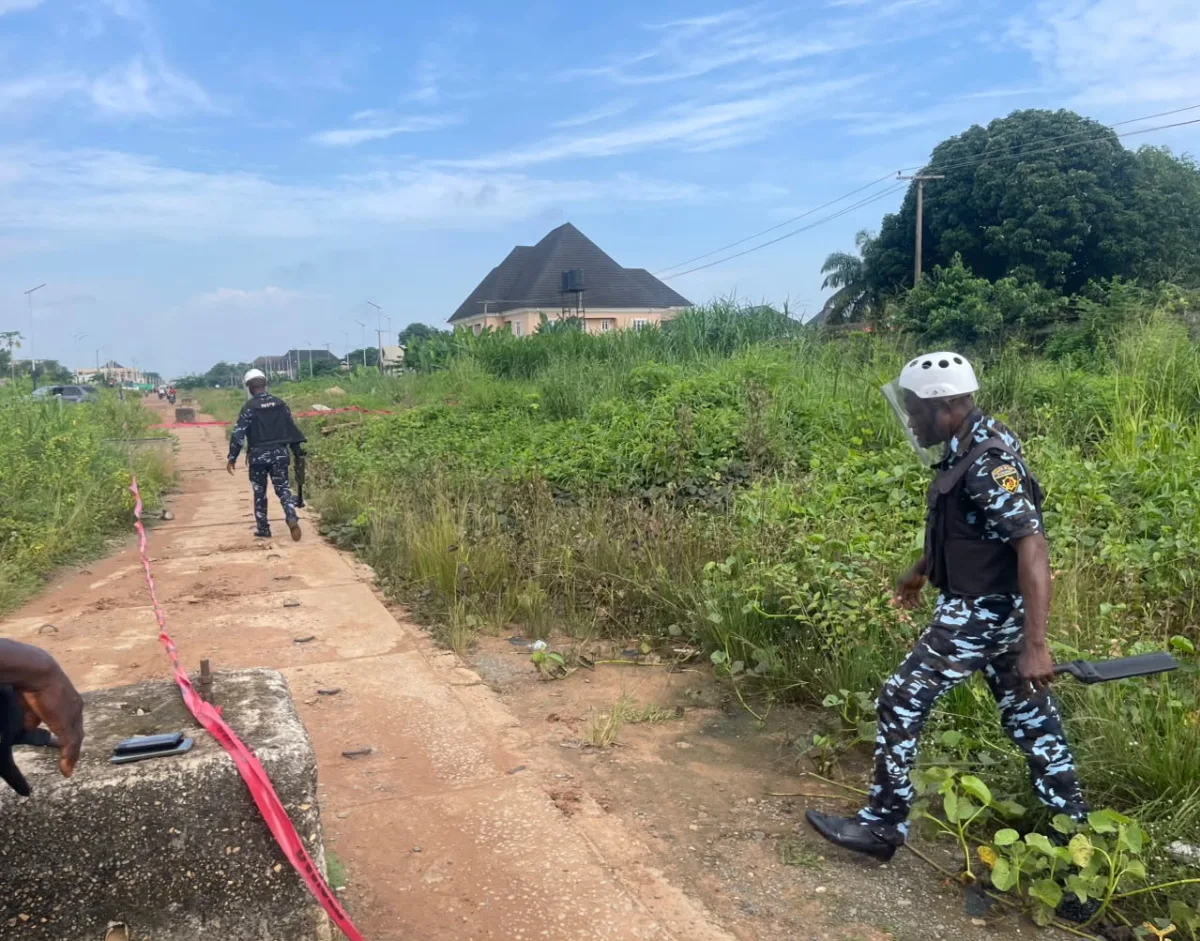
The Imo State Police Command swiftly responded to distress calls from residents. Officers cordoned off the area and deployed the Explosive Ordnance Disposal (EOD) Unit to secure the scene. The police spokesperson, DSP Henry Okoye, confirmed that the drainage channel has been declared safe after a thorough sweep. Preliminary investigations suggest the victims were scavenging for scrap metal when the explosion happened. However, the exact cause remains unknown. The EOD Unit has launched a comprehensive investigation to determine whether the blast was caused by an explosive device, trapped gas, or hazardous materials in the drainage system.
The incident exposes a dangerous undercurrent in Nigeria’s informal scrap metal economy. Scavengers often risk their lives searching for metal in unregulated environments like drainage channels, abandoned buildings, and landfills. These areas frequently contain undetonated explosives, chemical waste, or volatile gases. In 2023, a similar explosion in Lagos killed three scavengers who were dismantling a discarded gas cylinder. The lack of formal recycling infrastructure forces many unemployed youths into this high-risk trade. The Imo State government has not yet announced any plans to regulate or provide safer alternatives for scrap metal collectors.
The police investigation also raises questions about the security of public infrastructure in Owerri. Drainage channels are not typically monitored for hazardous materials. The presence of an explosive device or volatile substances in a residential area suggests a failure in urban safety protocols. The Imo State Environmental Protection Agency has not commented on whether routine checks are conducted in drainage systems. Residents near the blast site reported hearing a loud bang but assumed it was a generator backfire. This incident highlights the need for public awareness campaigns about the dangers of unexploded ordnance and industrial waste in urban areas.
The victims’ families have not received any official compensation or support from the state government. Hyginus Akalonu and Victor Egwu were the primary breadwinners for their households. Their deaths leave behind dependents who now face economic hardship. The Imo State Police Command has not indicated whether it will provide financial assistance or counseling to the families. This lack of post-tragedy support reflects a broader pattern in Nigeria, where victims of industrial or environmental accidents often receive no restitution. The state’s emergency response framework appears ill-equipped to handle the aftermath of such incidents.
The police have urged residents to report any suspicious objects or activities to security agencies. Commissioner of Police Audu Garba Bosso reassured the public that the situation is under control. However, the investigation’s slow progress has fueled speculation. Some residents believe the explosion was caused by a discarded military explosive, while others suspect illegal gas refilling operations in the area. The police have not ruled out any possibilities. The EOD Unit is conducting forensic analysis to trace the origin of the blast. If the explosion was caused by an explosive device, it could indicate a security breach in the state’s arms control measures.
The incident has also drawn attention to the role of local governments in waste management. Owerri West Local Government Area has no formal scrap metal collection or recycling program. Scavengers operate without licenses or safety equipment. The lack of regulation in this sector creates a black market for scrap metal, where dealers often purchase materials from unregistered collectors. This unregulated trade increases the risk of accidents, as scavengers are forced to work in hazardous conditions. The Imo State government has not announced any plans to formalize the scrap metal industry or provide safer working conditions for scavengers.
The Federal University of Technology Teaching Hospital, where the victims were pronounced dead, has not released a detailed medical report on the cause of death. The hospital’s spokesperson declined to comment on whether the victims suffered from internal injuries or chemical burns. This lack of transparency raises concerns about the hospital’s capacity to handle mass casualty incidents. The Imo State Ministry of Health has not issued any guidelines for hospitals on how to treat victims of industrial or environmental explosions. The absence of standardized protocols could delay life-saving interventions in future incidents.