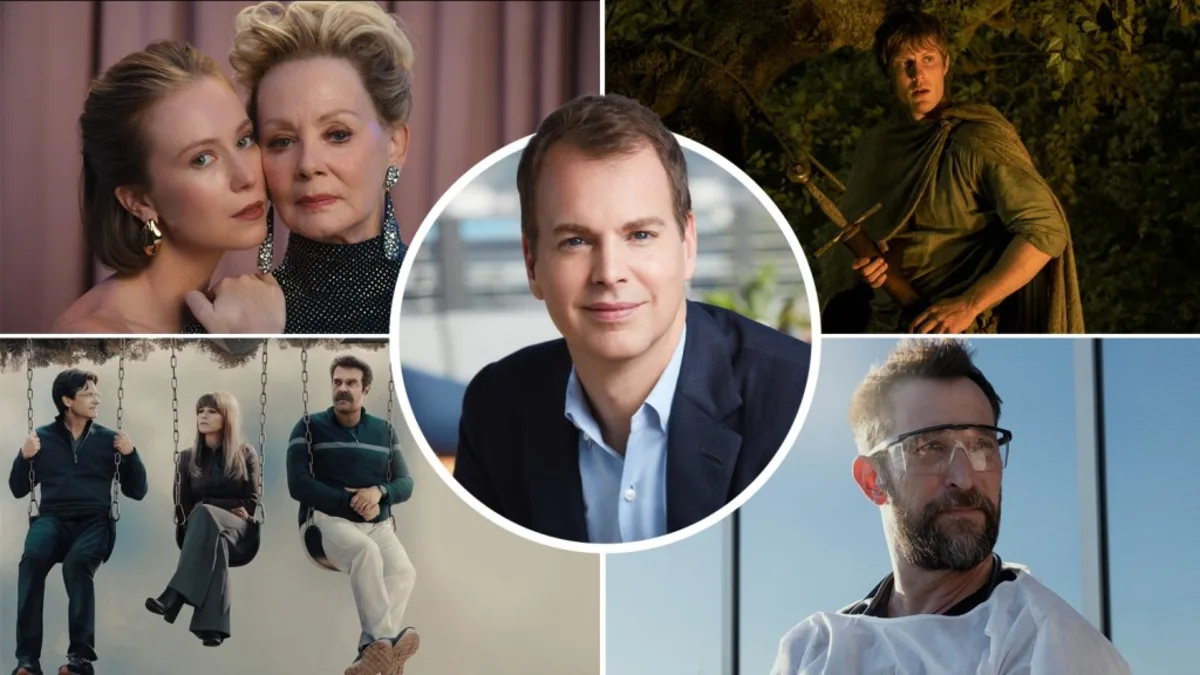
The 78th Primetime Emmy Awards nominations have delivered a seismic shift in the television landscape. HBO Max, under the stewardship of Chairman and CEO Casey Bloys, secured 122 nominations—more than any other platform for the seventh time in the last decade. The medical drama The Pitt led the charge with 25 nods, while the final season of Hacks shattered records with 24 nominations, the highest ever for a comedy series in a single year.
The dominance of HBO Max is not merely a statistical victory. It reflects a deliberate strategy of nurturing high-quality, ensemble-driven narratives. Bloys, in an interview with Deadline, emphasized the collective effort behind the nominations. "It’s a real testament to the team here and who they choose to work with," he said. The Pitt’s near-doubling of its nominations from last year—from 13 to 25—underscores the show’s ability to leverage its Los Angeles setting and expansive cast. Fifteen actors from the series received recognition, a rarity in an era where lead performances often overshadow ensemble work.
Hacks, which concluded its five-season run this year, exited with a flourish. Bloys praised the show’s creators—Jen Statsky, Paul W. Downs, and Lucia Aniello—for "sticking the landing." The series’ record-breaking haul is particularly notable given its departure from the traditional multi-camera sitcom format. Its success signals a broader industry shift toward serialized, character-driven comedy. The show’s final season, which maintained its sharp wit and emotional depth, has set a new benchmark for how comedies can evolve and conclude.
Yet, amid the celebration, a glaring issue persists: diversity. The 2026 Emmy nominations reveal an 11-year low in recognition for performers of color, with only 22 nominees from diverse backgrounds. This marks a 21% decline from last year’s 28 nominees. Categories such as Lead Actress in a Limited or Anthology Series or Movie, Guest Drama Actress, and Guest Comedy Actor and Actress featured no nominees of color. The Television Academy’s failure to reflect the industry’s demographic realities is a systemic problem, one that contrasts sharply with the peak of 2021, when 49 nominees of color were recognized.
The disparity is not just a numbers game. It exposes a structural flaw in how narratives are greenlit, developed, and ultimately rewarded. While HBO Max’s dominance is celebrated, the platform’s shows—despite their critical acclaim—do not fully address the diversity gap. The Pitt, for instance, features a predominantly white ensemble, while Hacks, though groundbreaking in its portrayal of a female-led comedy, does not center on racial diversity. The industry’s reliance on established franchises and familiar faces perpetuates a cycle where marginalized voices struggle to break through.
Apple TV+ emerged as a formidable contender, securing 87 nominations despite submitting only 31 shows—a stark contrast to Netflix’s 125 and HBO Max’s 86. The streamer’s "quality over quantity" strategy paid off, with Widow’s Bay and Pluribus leading its charge. Widow’s Bay, a dark comedy about a grieving widow navigating corporate intrigue, earned 19 nominations, including nods for stars Matthew Rhys and Kate O’Flynn. Pluribus, Vince Gilligan’s political thriller, garnered 18 nominations, the most for a first-season show under his direction. Apple’s success underscores a growing trend: platforms are increasingly prioritizing high-impact, limited-series storytelling over sprawling, episodic content.
The nominations also highlighted the resilience of legacy franchises. Euphoria, in its final season, secured Zendaya’s sixth Emmy nod for Best Actress in a Drama Series. The show’s ability to maintain cultural relevance despite its controversial themes speaks to its narrative boldness. Meanwhile, The Comeback, Lisa Kudrow’s meta-comedy about a washed-up actress, earned its third nomination 20 years after its debut. The show’s revival and Kudrow’s nomination for the role of Valerie Cherish—a character now enshrined as an HBO icon—demonstrate the enduring power of sharp, industry-satirical storytelling.
Behind the scenes, the nominations revealed a rare bright spot for diversity. Salli Richardson-Whitfield made history as the first Black woman to receive two drama directing nominations in a single year, for The Gilded Age and Task. Her achievement is a reminder of the progress still needed in an industry where women of color remain underrepresented in key creative roles. First-time nominees like Chase Infiniti (The Testaments) and Sepideh Moafi (The Pitt) also signal a slow but necessary shift toward recognizing fresh talent.
The 2026 Emmy nominations are a study in contrasts. HBO Max’s dominance is a triumph of institutional power, but the diversity shortfall exposes deep-seated inequities. Apple TV+’s rise proves that strategic, high-quality programming can compete with industry giants. Yet, the question remains: can the Television Academy evolve fast enough to reflect the audiences it serves? The answer will shape not just the awards, but the future of television itself.