
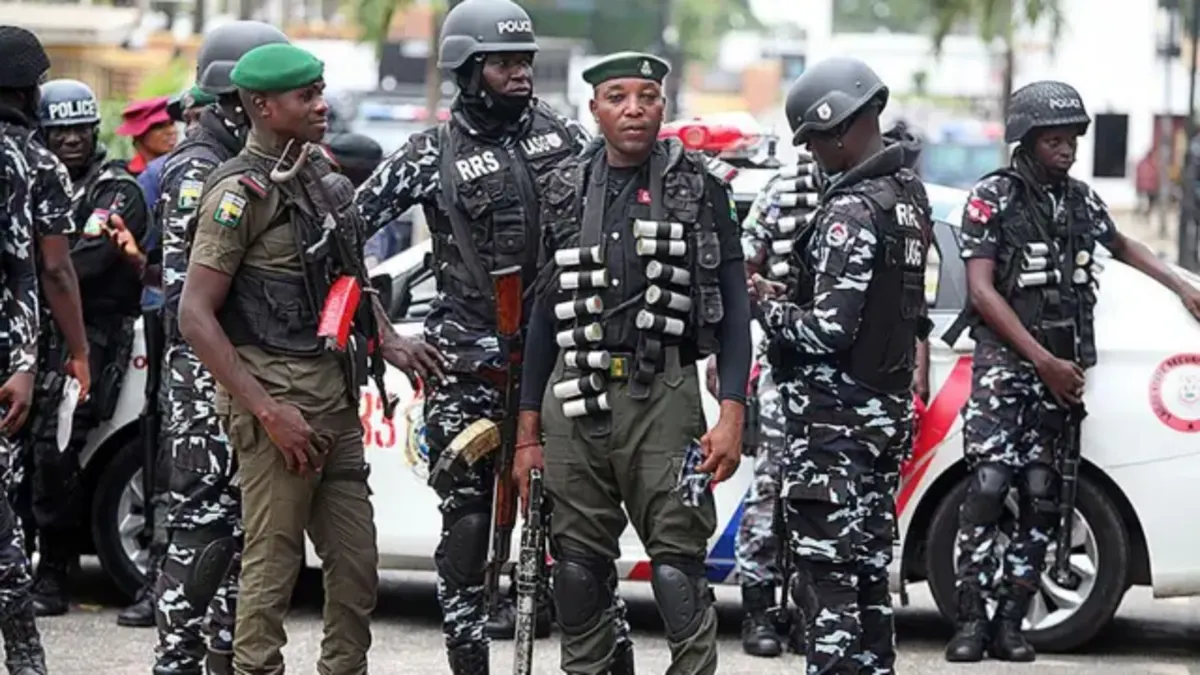
The Nigeria Governors’ Forum has demanded direct constitutional authority over security operations within their states. This push comes as the National Assembly moves closer to finalizing amendments that would establish state police. The governors’ proposal, outlined in a recent Nigeria Governors’ Forum bulletin, seeks to redefine the balance of power between federal and state security structures. It also insists on guaranteed funding mechanisms to ensure operational viability.
The governors’ demand arrives at a critical juncture. The House of Representatives passed the state police bill on June 10. The Senate followed on June 11, sending the proposal to its Constitution Review Committee. If ratified, the reform would mark the most significant shift in Nigeria’s security architecture since the return to democracy in 1999. The governors’ forum report reveals a detailed framework for cooperative federalism. Under this model, the Federal Police Service would retain jurisdiction over crimes of national significance—terrorism, treason, narcotics trafficking, and interstate criminal activity. State Police Services would handle offenses defined under state laws, including local crimes and public order violations.
The governors’ proposal directly challenges the current constitutional ambiguity. While governors are officially designated as chief security officers of their states, they lack operational control over the Nigeria Police Force. This disconnect has fueled frustration as insecurity worsens. Banditry, kidnapping, and communal violence have overwhelmed the federal police’s capacity. The governors’ forum report argues that decentralized policing would enable faster, more localized responses to these threats. It also proposes mechanisms for transferring federal police assets, commands, and personnel to state police services. Federal officers could voluntarily transition to state forces without losing rank, seniority, or pension benefits.
Funding remains a contentious issue. The governors’ forum report emphasizes the need for constitutional provisions guaranteeing sustainable financial support for state police. Without predictable funding, state forces could face operational paralysis. The report warns that discretionary financing would undermine effectiveness. It suggests transitional federal support and the establishment of State Security Trust Funds to attract private sector partnerships. This funding model aims to prevent state police from becoming under-resourced extensions of gubernatorial power. However, fiscal realities cast doubt on its feasibility. A technical committee established by the Inspector-General of Police estimated the initial setup cost for state police at between N589 billion and N813 billion over five years. Individual states would require approximately N10 billion for initial infrastructure and N3 billion monthly for salaries and operations.
The governors’ proposal has reignited long-standing concerns about political manipulation. Critics argue that state police could become tools for suppressing opposition, rigging elections, or targeting minority groups. The governors’ forum report attempts to address these fears by proposing robust oversight mechanisms. It recommends including a rotating representative of State Attorneys-General on the National Police Council. This would strengthen state participation in national policing policy while maintaining federal oversight. The report also stresses the need for professionalism, accountability, and operational independence. Yet, historical precedents raise doubts. The Nigeria Police Force, despite federal oversight, has been accused of human rights abuses and partisan interference. State police, without strict safeguards, could replicate or amplify these failures.
A deeper structural flaw in the governors’ proposal has received little attention. The framework assumes that state police would operate within clearly defined constitutional jurisdictions. However, Nigeria’s legal landscape complicates this assumption. Many crimes—such as kidnapping, armed robbery, and murder—are prosecuted under both federal and state laws. This overlap could create jurisdictional conflicts between federal and state police. For example, a kidnapping case involving interstate movement might fall under federal jurisdiction, while a similar case confined to a single state could be handled by state police. The lack of a clear dispute resolution mechanism could lead to turf wars, delayed investigations, and weakened law enforcement.
The ethnic dimension of state police presents another overlooked risk. Nigeria’s federal police force operates under a recruitment system designed to balance ethnic representation. Officers are rotated across states, reducing the risk of local capture. State police, however, would be recruited locally and accountable to local governments. In ethnically diverse states like Plateau, Benue, and Kaduna, this could exacerbate communal tensions. Minority groups might fear that state police would favor the majority ethnic group. The governors’ forum report does not adequately address this concern. It fails to propose mechanisms for ensuring ethnic balance in state police recruitment or protecting minority communities from potential bias.
Technological risks further complicate the state police debate. Modern policing relies on facial recognition, predictive algorithms, and digital forensics. These tools are not neutral. They carry embedded biases that reflect the data on which they are trained. Facial recognition systems, for instance, have been shown to misidentify individuals with darker skin tones at higher rates. In a state police system dominated by a single ethnic group, these biases could become weapons. Majority-controlled police forces could use surveillance databases to shield their own communities while targeting minorities. Without federal oversight, state police could manipulate digital evidence, suppress surveillance footage, or fabricate forensic reports. The governors’ forum report does not address these technological vulnerabilities.
The urgency of the state police reform cannot be overstated. Nigeria’s security crisis has reached a breaking point. The federal police force, stretched thin and under-resourced, has failed to stem the tide of violence. State police, with proper safeguards, could provide a more agile and localized response. However, the governors’ proposal must be scrutinized beyond the immediate political gains. The National Assembly must ensure that the enabling legislation includes ironclad protections against abuse. Independent oversight bodies, whistleblower protections, and federal intervention protocols must be non-negotiable. Without these safeguards, state police could become another layer of institutional failure rather than a solution to Nigeria’s security challenges.