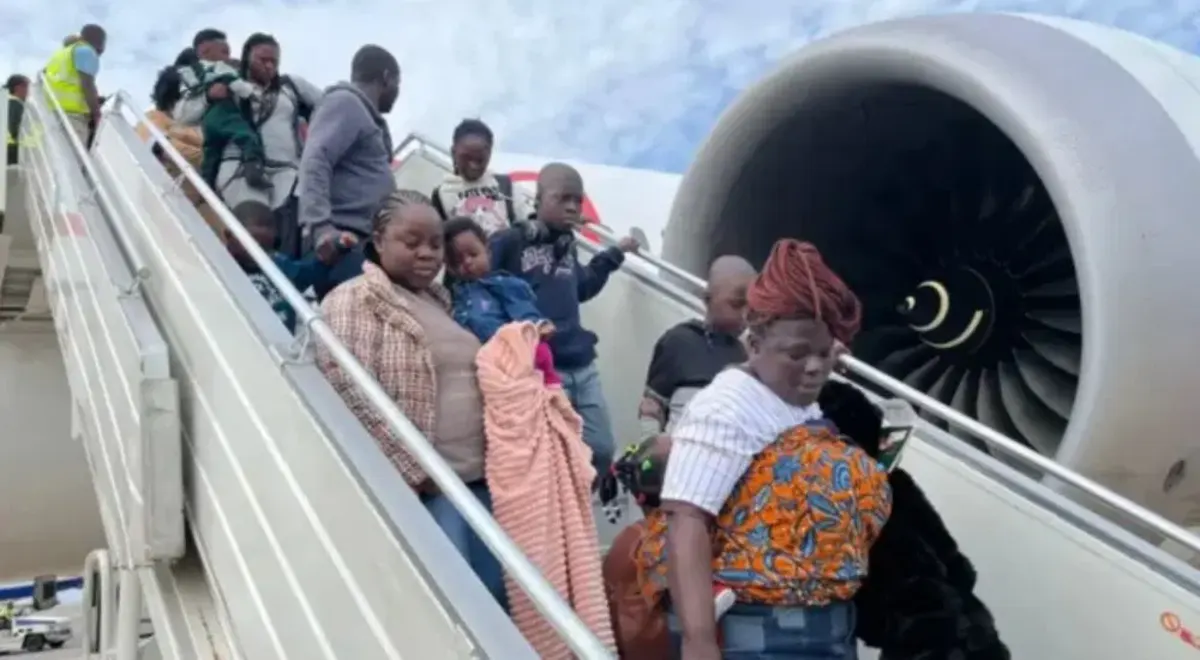
The Federal Government will conclude its emergency evacuation of Nigerians from South Africa on Wednesday. An Air Peace flight carrying 315 returnees is scheduled to depart Johannesburg at 1.30 a.m. and arrive at Murtala Muhammed International Airport in Lagos at 6.30 a.m. This marks the fifth and final flight in a month-long operation triggered by a surge in xenophobic attacks.
The Ministry of Foreign Affairs confirmed the details in a statement issued on Tuesday. Spokesperson Kimiebi Imomotimi Ebienfa said the flight would bring the total number of repatriated citizens to 1,561. This includes 1,141 evacuees transported on four previous government-chartered flights since June 11. An additional 66 Nigerians returned through private arrangements while 39 others flew on separate Air Peace services. The government has not disclosed the total cost of the operation or the breakdown of expenses per flight.
The evacuation exercise exposed critical gaps in Nigeria’s consular preparedness. While the government acted swiftly to airlift citizens, no formal registration system existed to track Nigerians in distress abroad. Returnees reported long waits for documentation assistance at the Nigerian High Commission in Pretoria. Some claimed they had to rely on social media groups to coordinate evacuation slots. The Foreign Affairs Ministry has not addressed whether it will establish a permanent crisis registry for citizens in high-risk countries.
South Africa’s xenophobic violence has followed a predictable pattern over the past decade. Attacks typically escalate during economic downturns when local unemployment rises. The current wave began in late May after a series of job protests by South African trade unions. Nigerian-owned businesses in Johannesburg and Pretoria became primary targets. The South African government deployed army units to affected areas but critics argue enforcement remains inconsistent. Nigerian diplomatic missions have documented 47 attacks on Nigerian businesses since June 1 but no arrests have been publicly confirmed.
The repatriation operation revealed deeper structural issues in Nigeria’s labour migration policy. Most evacuees were low-skilled workers employed in South Africa’s informal sector. Many had lived in the country for over five years without permanent residency. Nigeria’s National Bureau of Statistics reports that 78% of Nigerian migrants in South Africa work in retail, construction or domestic services. The government has no formal skills transfer programme to reintegrate returnees into Nigeria’s labour market. Local government officials in Lagos confirmed they received no advance notice of the evacuation scale or returnee profiles.
Air Peace emerged as the sole commercial carrier willing to operate evacuation flights. The airline deployed Boeing 737-800 aircraft configured for high-density seating. Industry sources estimate each flight cost approximately 45 million naira in fuel and operational expenses. Air Peace has not disclosed whether the government covered these costs or if the airline absorbed them as corporate social responsibility. The carrier’s involvement highlights Nigeria’s limited aviation capacity during international crises. The country’s other major airlines either lacked suitable aircraft or declined to participate citing commercial risks.
The evacuation’s conclusion leaves unresolved questions about Nigeria’s long-term strategy for citizens abroad. The Foreign Affairs Ministry has not announced plans for trauma counselling or economic reintegration support. Returnees interviewed by local media expressed frustration at the lack of government communication about available assistance. Lagos State officials confirmed they have allocated temporary shelter at the Lagos Airport Hotel but no permanent housing solutions have been announced. The federal government’s 2026 budget contains no specific allocation for migrant reintegration programmes despite repeated xenophobic incidents in South Africa since 2019.
Regional diplomatic tensions may escalate following the evacuation. Nigeria’s High Commissioner to South Africa has requested an urgent meeting with South African authorities to discuss compensation for affected citizens. The South African government has not responded to previous requests for asset protection guarantees. ECOWAS protocols on free movement remain unenforced between both countries. Nigerian trade unions have threatened to boycott South African businesses operating in Nigeria unless concrete security measures are implemented. The South African Chamber of Commerce in Nigeria reported a 32% decline in patronage since the attacks began.