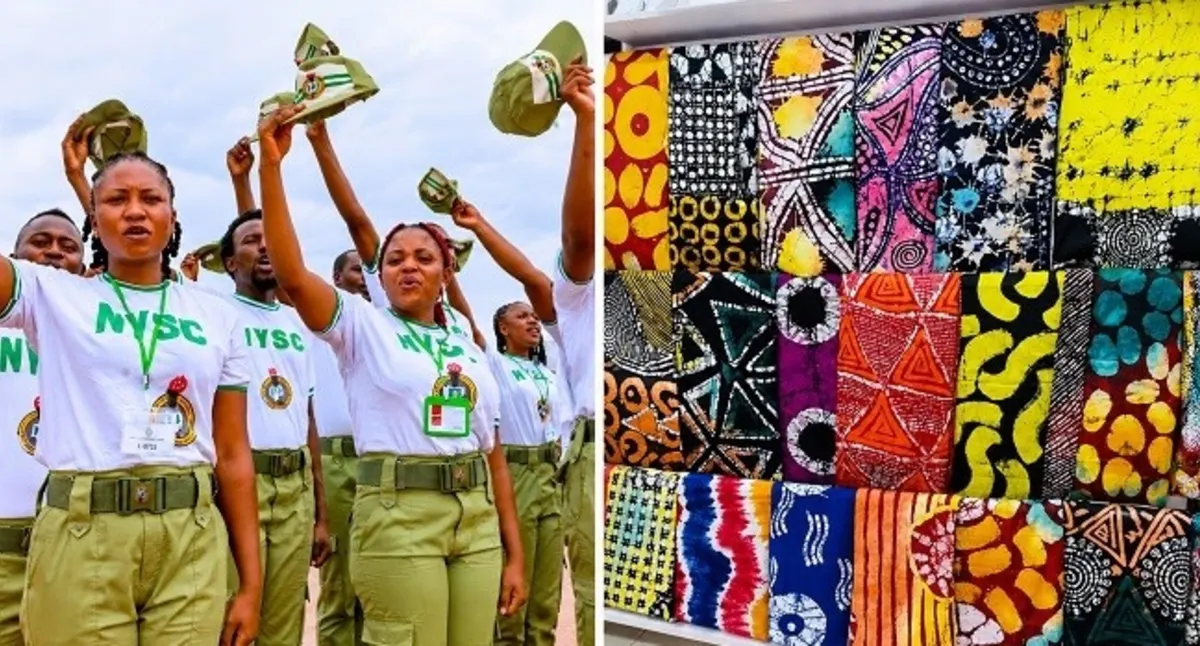
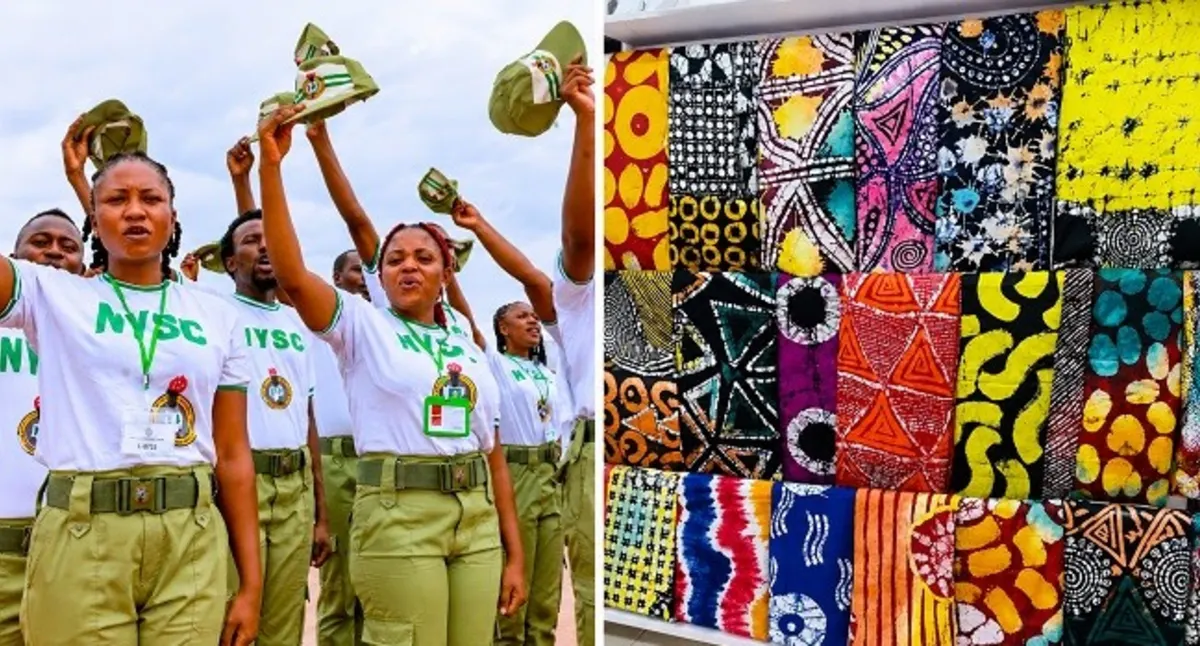
The Federal Government has officially approved the replacement of the National Youth Service Corps (NYSC) khaki uniform with Adire fabric, a move that has ignited fierce debate across Nigeria. Minister of Youth Development Ayodele Olawande announced the decision on July 2, framing it as a strategic shift to revive local textile industries and align the scheme with modern economic priorities. The reform, the first major overhaul of the NYSC since its 1973 inception, also introduces skills-based deployment and revised security protocols for corps members.
The government insists the Adire policy will inject billions of naira into Nigeria’s struggling textile sector. Olawande revealed that Adire production hubs in Ogun and Kwara states will be primary beneficiaries, with the ministry targeting a phased rollout beginning in 2027. "We have the textile industry. Let’s put our money back into the country," he stated during a Channels Television interview. The policy aligns with President Bola Tinubu’s broader economic agenda, which prioritises local content and import substitution. However, the timing has raised eyebrows, coming amid soaring inflation and widespread youth unemployment.
Public reaction has been sharply divided. Critics argue the Adire fabric, deeply rooted in Yoruba cultural heritage, risks alienating corps members from other ethnic groups. Social media erupted with accusations of ethnic favouritism, with some users demanding a national design competition instead. "Why Adire? Why not allow each state to produce its own fabric for corps members?" asked one commentator on X. Others questioned the government’s priorities, pointing to persistent issues like delayed allowances and inadequate security for corps members in volatile regions. The backlash underscores the sensitivity of national symbols in a country still grappling with post-civil war unity.
The reforms extend beyond uniforms. The NYSC will now deploy corps members based on their academic qualifications and professional skills, a departure from the current random posting system. Graduates with education degrees will be posted to schools, while engineers and medical professionals will be assigned to relevant sectors. Olawande described the change as a move to make the service year more productive. "You are not just posted to a school because NYSC wants you there. Your skills determine your posting," he explained. The policy aims to address long-standing complaints about wasted human capital, where doctors serve as classroom teachers and engineers work in administrative roles.
Security concerns have also shaped the reforms. The government will now prioritise posting corps members to states where they studied or have familial ties. This adjustment responds to rising insecurity in parts of the North-East and North-West, where corps members have been targeted by insurgents and bandits. Olawande noted that the new approach would reduce redeployment requests, which have surged in recent years. "If you have no interest in serving in the North-East, we will not force you," he said. The policy marks a pragmatic retreat from the NYSC’s original mandate of national integration, reflecting the harsh realities of contemporary Nigeria.
Despite the civilian-led restructuring, the military will retain a role in the NYSC. Olawande dismissed reports of a complete military withdrawal, clarifying that the armed forces will continue to provide security during orientation camps and emergency situations. The Federal Executive Council has directed the Attorney-General of the Federation to amend the NYSC Act to legalise the reforms. Legal experts warn that the amendments could face challenges in the National Assembly, where lawmakers have previously resisted attempts to modify the scheme’s foundational principles. The NYSC’s legal framework, rooted in Decree No. 24 of 1973, has remained largely unchanged, making this overhaul a historic shift.
The Adire policy exposes deeper structural weaknesses in Nigeria’s textile industry. While the government touts job creation, industry analysts point to systemic challenges, including unreliable power supply, high production costs, and smuggling of cheaper foreign fabrics. Nigeria’s textile sector, once a regional powerhouse, now operates at less than 20% capacity. The Adire initiative, while symbolically significant, may struggle to deliver tangible economic benefits without broader reforms. Critics argue that the government should focus on fixing infrastructure and enforcing import bans before imposing new procurement mandates.
The NYSC’s evolution reflects Nigeria’s shifting political and economic landscape. Established to foster national unity after the civil war, the scheme has faced growing criticism over its relevance in an era of mass unemployment and insecurity. The new reforms attempt to modernise the NYSC, but they also risk diluting its original purpose. As one analyst noted, "The NYSC was designed to break ethnic barriers. Now, it’s being reshaped by them." The government’s challenge will be balancing economic pragmatism with the scheme’s foundational ideals, all while navigating public scepticism and institutional resistance.
The Adire uniform debate has overshadowed other critical aspects of the reforms, such as the introduction of digital tracking for corps members and partnerships with private sector employers. These measures aim to improve accountability and enhance post-service employment prospects. However, their success hinges on effective implementation, a perennial weakness in Nigerian governance. With the 2027 rollout looming, the government faces a tight timeline to address logistical hurdles, from fabric production to legal amendments. The stakes are high: a failed reform could further erode public trust in the NYSC, while a successful one could redefine national service for a new generation.