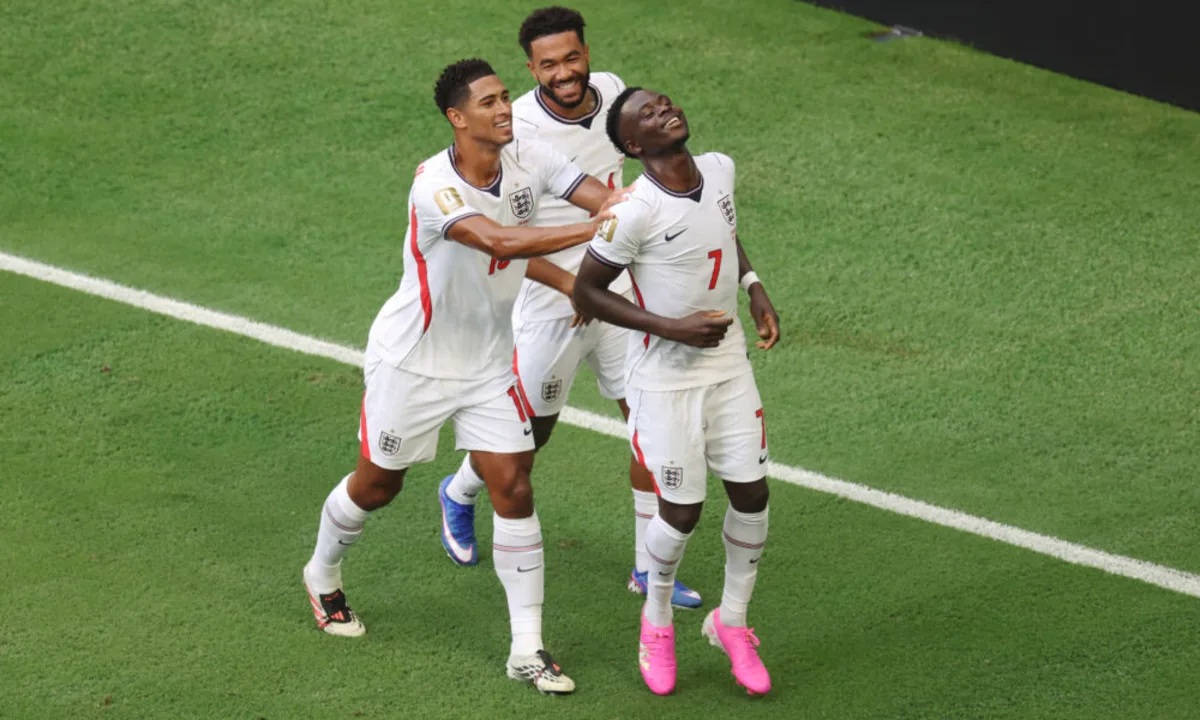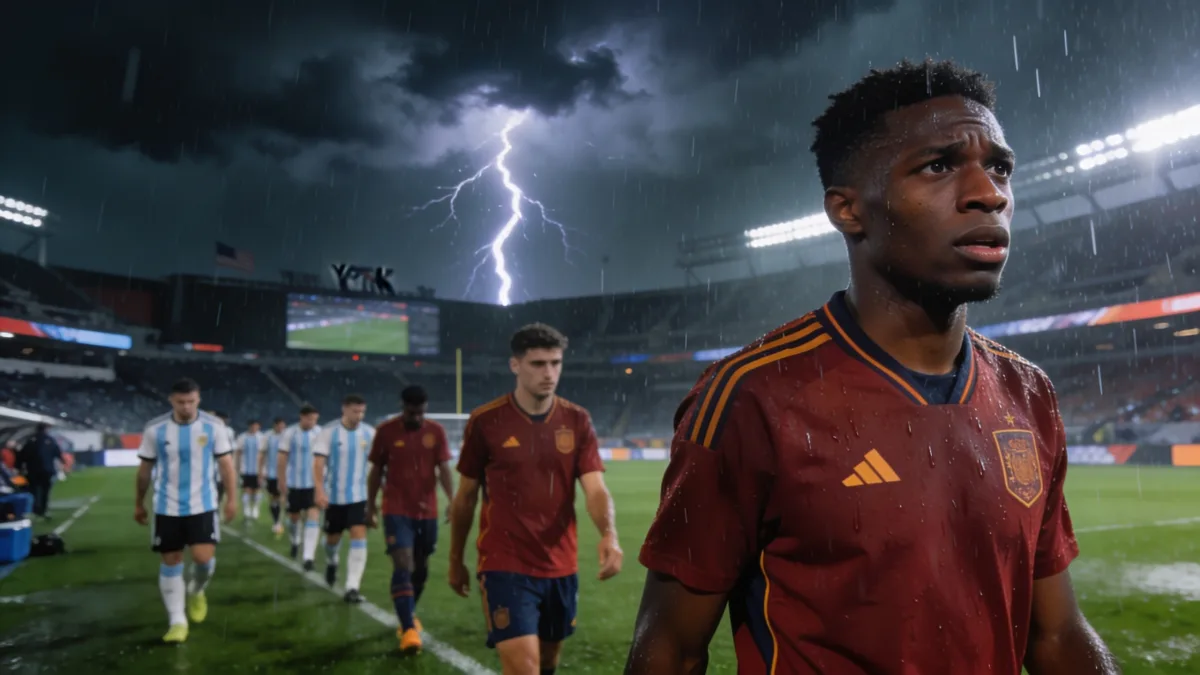
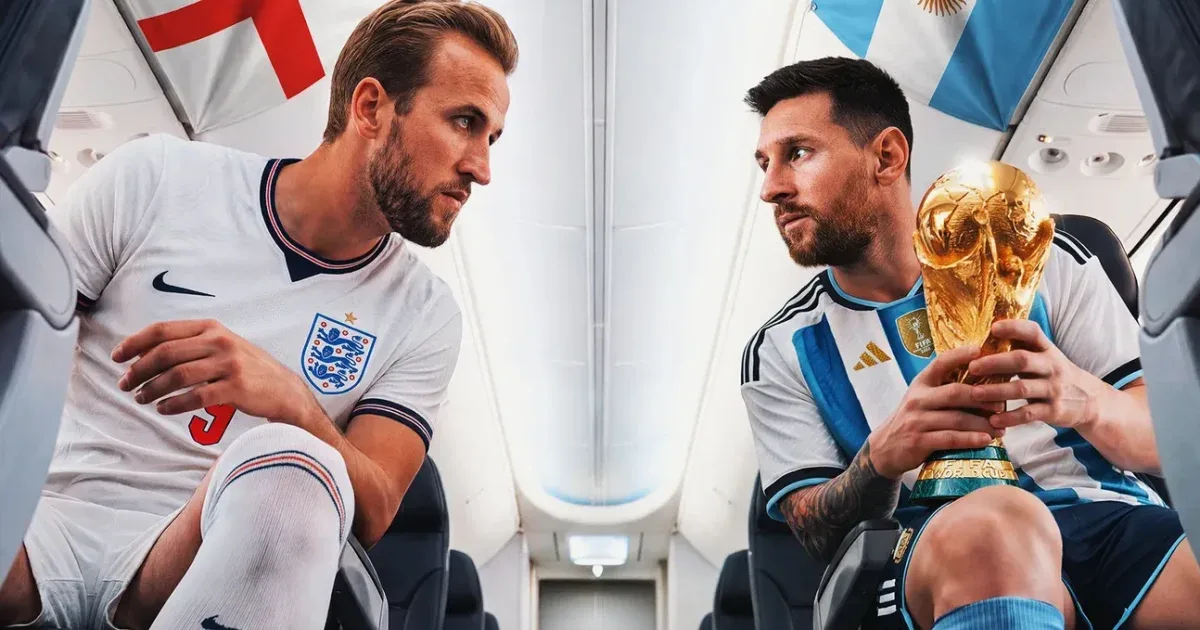
The FBI has designated Wednesday’s World Cup semi-final between England and Argentina as the tournament’s single highest-risk fixture, triggering an unprecedented security lockdown that stretches from the Mercedes-Benz Stadium perimeter to the diplomatic corridors of Buenos Aires and London. A closed-door briefing on Monday, attended by FBI counter-terrorism analysts, FIFA security chiefs and Atlanta Police command, concluded that the confluence of footballing rivalry, lingering Falklands grievances and unregulated ticket resale platforms created a perfect storm of potential disorder. While rival fans will enter the stadium through separate gates, the absence of internal segregation—standard practice at every previous knockout match—means that Argentine and English supporters will sit shoulder-to-shoulder once inside, a decision that security sources privately admit leaves them powerless to prevent spontaneous flashpoints.
The diplomatic temperature has been rising all week. On Sunday, Argentina’s Foreign Minister Diana Mondino restated the country’s sovereignty claim over the Falkland Islands in a statement timed to coincide with the eve of the match. Downing Street responded within hours, with Prime Minister Keir Starmer issuing a terse rejection that described the claim as “historically settled and legally closed.” The 1982 conflict, which claimed 907 lives, remains a raw nerve; Argentine players have been filmed singing Falklands-themed chants after each knockout victory, and intelligence reports indicate that ultras from both nations have been exchanging provocative messages on encrypted social media channels since the quarter-final draw was announced. Atlanta Police have stationed armed rapid-response units at every major transport hub and deployed undercover officers inside the stadium, yet the sheer volume of third-party ticket resales—estimated at over 12,000 seats—has rendered any attempt at fan segregation inside the bowl effectively obsolete.
Tactically, both managers face selection dilemmas that could reshape the final. England’s Gareth Southgate must decide whether to restore Harry Kane to a lone striker role or risk a midfield collapse by fielding a front three that leaves Declan Rice and Kobbie Mainoo exposed against Argentina’s relentless transitional play. Kane, who has scored in every knockout round, has been training with strapping on his previously injured ankle, but medical staff have privately warned that another 90 minutes of direct running could compromise his availability for Sunday’s final. Across the city, Lionel Scaloni is wrestling with a different problem: whether to start Ángel Di María, whose pace on the left flank could exploit England’s high defensive line, or opt for the more defensively disciplined Giovani Lo Celso to shore up a back four that conceded twice in the quarter-final against Switzerland. The decision carries deeper squad implications; a starting berth for Di María would likely mean benching 19-year-old sensation Alejandro Garnacho, whose explosive cameos have galvanised the dressing room but whose positional naivety could be ruthlessly exposed by England’s full-backs.
Behind the scenes, a hidden financial fracture is widening. The English Football Association has lodged a formal complaint with FIFA after discovering that Argentina’s players received a £1.2 million bonus for reaching the semi-finals, paid directly by the Argentine government rather than the national federation. Such state-backed payments contravene FIFA’s strict regulations on third-party influence, yet the timing of the disclosure—less than 48 hours before kick-off—suggests a deliberate attempt to destabilise the opposition camp. The FA’s legal team is preparing a dossier for the FIFA Disciplinary Committee, but any ruling will arrive too late to affect Wednesday’s match, leaving Southgate’s players to absorb the psychological blow of what they perceive as an uneven playing field. Meanwhile, Argentina’s squad have been instructed to avoid all media questions about the bonus, a gag order that has only fuelled speculation that the payment was conditional on reaching the final and thus carries an implicit pressure to win at all costs.
Security planners have also identified a micro-tactical vulnerability that could escalate into a full-blown crowd incident. Argentina’s supporters traditionally congregate in the north-east corner of the stadium, directly behind their team’s attacking third. England’s ultras, however, have historically massed in the south-west quadrant. The stadium’s CCTV heat maps reveal that these two zones are connected by a single narrow concourse that funnels fans past each other during half-time and full-time. With alcohol sales permitted until the 75th minute, intelligence analysts predict that the 60-minute mark—when both sets of supporters are likely to be at peak inebriation—will become the most volatile window. Atlanta Police have quietly repositioned riot-trained officers along this concourse and installed temporary barriers that can be deployed within 90 seconds, yet the sheer density of bodies expected in the tunnel area means that any physical confrontation could quickly spiral beyond control.
Boardroom interference has further complicated the pre-match narrative. The English FA’s chairman, Debbie Hewitt, flew to Atlanta on Monday evening after receiving a dossier alleging that FIFA’s refereeing committee had pre-selected a Spanish official for the final, irrespective of Wednesday’s result. The dossier, compiled by an independent analytics firm, cites a pattern of refereeing decisions in previous tournaments that statistically favoured teams coached by Spanish-speaking managers. While the FA has not publicly challenged the appointment process, Hewitt’s presence in Atlanta is widely interpreted as a signal that England will demand transparency if they progress. Across the city, the Argentine Football Association president, Claudio Tapia, has been holding parallel meetings with FIFA’s commercial partners, reportedly to secure a larger share of the final’s broadcast revenue for CONMEBOL, a move that has drawn sharp criticism from UEFA delegates who view it as an attempt to hijack the tournament’s financial legacy.
The psychological warfare extends to the pitch itself. England’s players have been subjected to a carefully orchestrated campaign of mind games that began the moment Argentina secured their quarter-final victory. Over the past 72 hours, every English squad member has received a personalised video message from an Argentine legend—Diego Maradona, Gabriel Batistuta, Sergio Agüero—each clip ending with the same phrase: “We know what you took from us in ’86. This time, we take it back.” The messages were traced to a server in Buenos Aires and are believed to have been distributed via a third-party app that bypassed the FA’s cyber-security filters. Sports psychologists embedded with the England camp report that the videos have triggered a measurable spike in cortisol levels among the players, particularly those who were not alive during the 1986 quarter-final and thus lack the historical context to contextualise the provocation. Southgate has responded by banning all non-essential devices from the team hotel and replacing the usual pre-match film sessions with a tactical masterclass on Argentina’s defensive frailties, yet the damage may already be done.
Beyond the immediate tactical and security concerns, the match carries profound structural consequences for the future of the World Cup. FIFA’s decision to award the 2026 tournament to a three-nation host—USA, Canada, Mexico—was predicated on the assumption that geographical proximity would reduce travel-related disorder. Yet the England-Argentina semi-final, played in Atlanta, has exposed a critical flaw: the absence of a unified fan-zoning policy across host cities. While Atlanta has implemented separate entry gates, other venues have not, creating a patchwork of security standards that could be exploited by organised hooligan groups in future tournaments. FIFA’s security task force is already drafting a confidential report that recommends a single, enforceable fan-segregation protocol for the 2030 edition, a proposal that will face stiff resistance from commercial partners who argue that mixed seating maximises ticket resale revenue and thus broadcast rights value.