
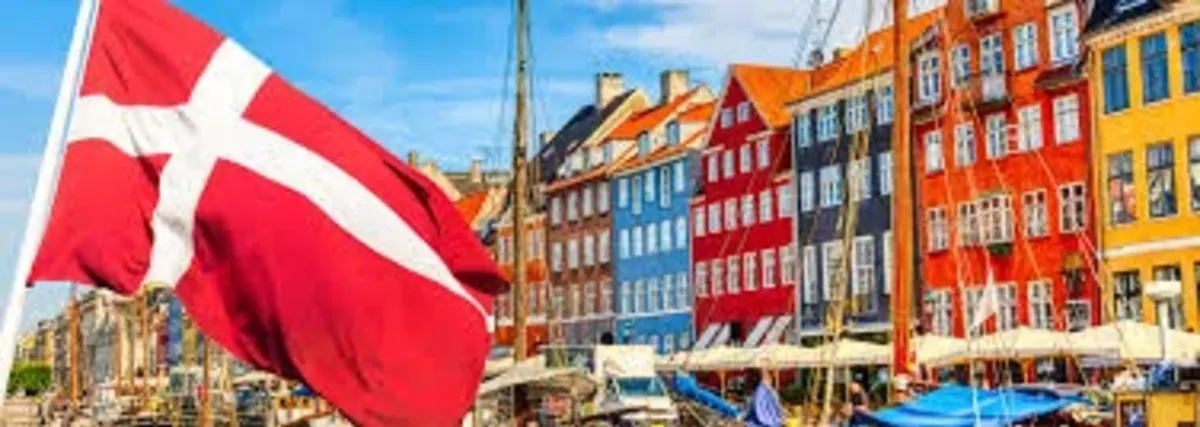
Denmark shattered its all-time temperature record on June 27, 2026, when thermometers in Beldringe and Odum climbed to 37.0 degrees Celsius. The Danish Meteorological Institute confirmed the reading within an hour of an earlier provisional record of 36.6C. This marked the first time Denmark has crossed the 37-degree threshold since measurements began in 1874. The previous high of 36.4C, set in August 1975, stood for nearly half a century before falling in a single afternoon.
The record-breaking heat did not arrive in isolation. It formed part of a broader, relentless heatwave that has gripped Europe since mid-June. Germany, Switzerland, and the Czech Republic all reported new national highs within the same 24-hour window. Germany’s eastern town of Möckern-Drewitz hit 41.5C, surpassing a record set just the day before. The Czech Republic’s Doksany station recorded 40.8C, while Basel in Switzerland reached 39C for the third consecutive day. Meteorologists attributed the extreme conditions to a persistent “heat dome” — a high-pressure system that traps warm air and intensifies solar heating under cloudless skies.
The human toll of the heatwave has been severe. France reported at least 55 drowning deaths since the start of the heatwave, with two-thirds occurring in unsupervised swimming areas. Spain’s MoMo monitoring system linked 327 deaths to heat exposure between June 22 and June 26. Emergency services across the continent have reported saturated facilities, with hospitals and fire brigades stretched beyond capacity. In Copenhagen, police deployed water cannons to spray mist over crowds gathered near fountains and harbours. Roskilde Festival, one of Europe’s largest music events, installed extra water stations after attendees described dragging luggage to campsites as “unbearable.”
Climate scientists have warned that such extreme heatwaves are no longer anomalies but systemic shifts driven by global warming. The World Weather Attribution group stated that a heatwave of this magnitude in early summer would have been “virtually impossible” 50 years ago. Their analysis concluded that climate change has increased the likelihood of such events by at least tenfold. Peter Tanev, a meteorologist for Danish broadcaster TV2, reinforced this view. “We’ve known for years that this risk was coming,” he said. “The question now is not if, but when Denmark will hit 40 degrees.”
The economic and infrastructural disruptions extend beyond public health. Agriculture sectors in northern Europe, unaccustomed to prolonged heat, face crop failures and livestock stress. Denmark’s dairy industry, a cornerstone of its economy, has reported reduced milk yields as cows struggle with heat stress. Rail networks in Germany and Switzerland have imposed speed restrictions to prevent track buckling, causing delays across regional transit systems. In the Czech Republic, power grids have experienced surges in demand as air conditioning usage spikes, leading to localized blackouts in rural areas.
An overlooked dimension of this crisis is its psychological and social impact. Cities designed for temperate climates are ill-equipped to handle extreme heat. Copenhagen’s urban layout, with dense housing and limited green spaces, exacerbates the “urban heat island” effect, where concrete and asphalt absorb and radiate heat long after sunset. Environmental engineer Lasse Fjeldgaard, 26, described the experience as “slowly melting away” after cooling off in the harbour. “No one is built for these temperatures,” he said. “You watch out for strangers as much as your friends.” The heatwave has also exposed generational divides. Older populations, less likely to use digital alerts, remain at higher risk of heatstroke, while younger demographics face disruptions to education and employment.
Another underreported angle is the heatwave’s role in accelerating Europe’s energy transition. Countries like Denmark, which have invested heavily in wind and solar power, have seen renewable energy output plummet due to still air and reduced solar panel efficiency at extreme temperatures. This has forced temporary reliance on gas and coal plants, undermining climate targets. In Germany, the Green Party has called the heatwave a “health crisis” and urged faster adoption of passive cooling solutions, such as reflective building materials and urban tree planting. Meanwhile, the European Union’s climate monitoring agency has warned that without immediate policy action, heatwaves of this intensity could become annual events by 2050.
The record in Denmark is not just a meteorological footnote. It signals a broader collapse of historical climate baselines across Europe. The continent is warming at twice the global average rate, driven by Arctic amplification and shifts in the jet stream. Scientists predict that by 2030, heatwaves will start earlier, last longer, and reach higher peaks. For Denmark, a country where summer temperatures rarely exceeded 25C a generation ago, the new reality demands urgent adaptation. As Rasmus Stoltze Hansen of the DMI noted, “This record will not stand for long.” The challenge now is whether institutions, economies, and societies can adapt faster than the climate changes.