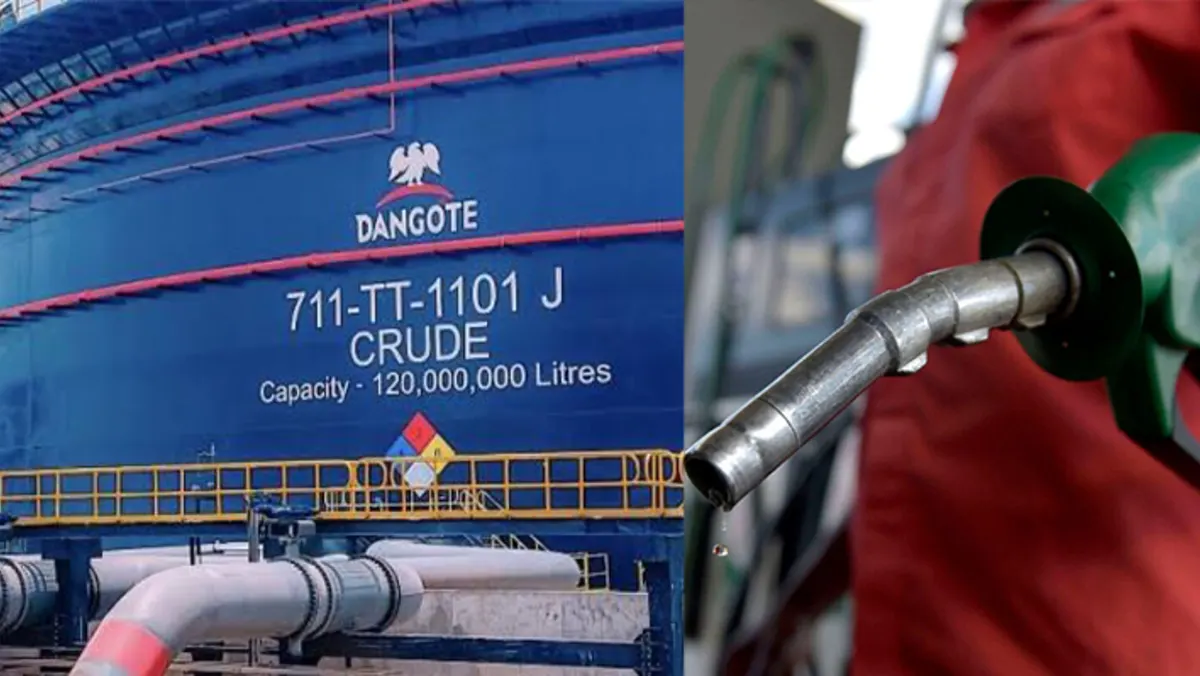
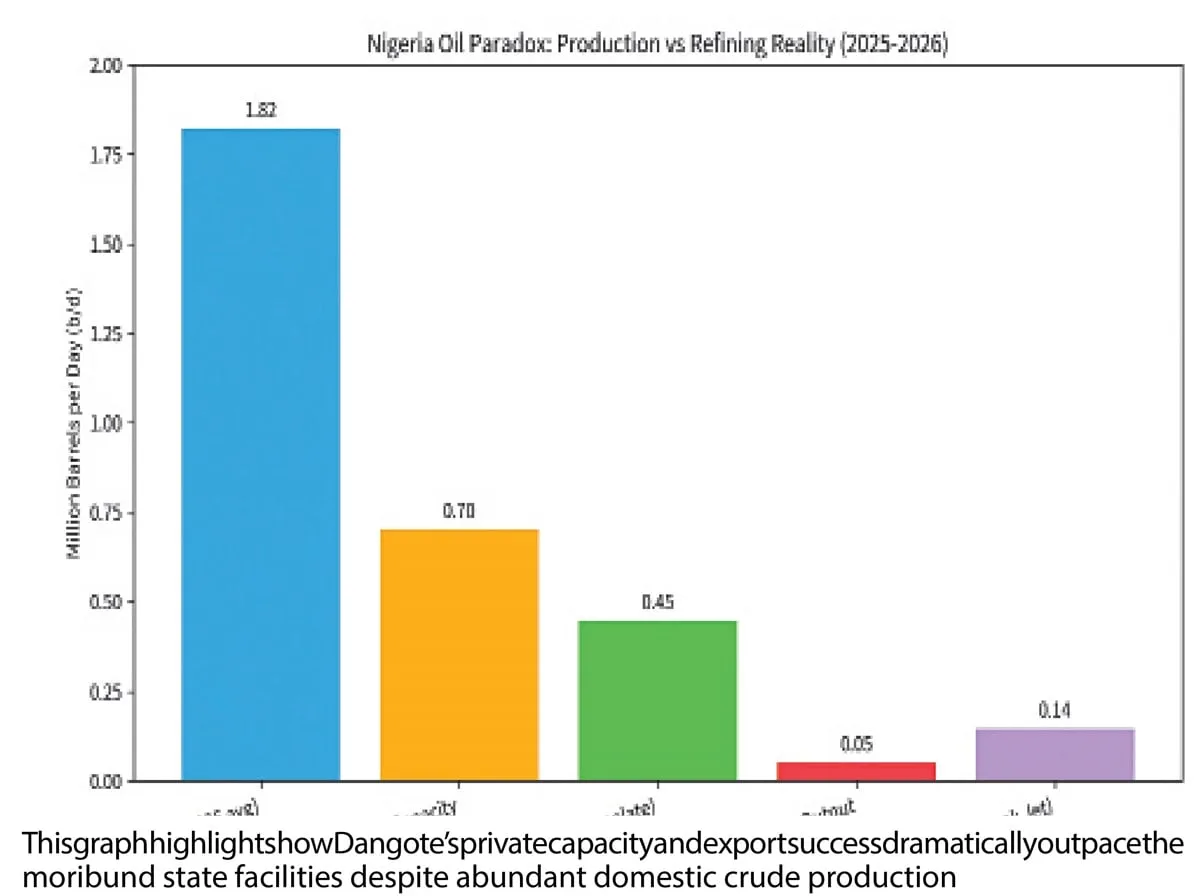
The Dangote Petroleum Refinery in Lagos is processing 648,500 barrels of crude oil daily at 99.4 percent capacity. This private facility now supplies 80 percent of Nigeria’s domestic fuel demand while exporting refined products to Europe and West Africa. The state-owned refineries in Port Harcourt, Warri, and Kaduna remain idle. Their failure underscores a governance crisis within the Nigerian National Petroleum Company Limited (NNPC).
The Dangote refinery’s operational data for May and June 2026 reveals a strategic sourcing model. Approximately 78 percent of its crude feedstock comes from NNPC and indigenous producers. The remaining 22 percent is imported from Angola, Libya, Ghana, and Guyana. This diversified supply chain ensures uninterrupted production. Dr. Muda Yusuf, CEO of the Centre for the Promotion of Private Enterprise, calls this a commercial necessity. A 650,000-barrel-per-day refinery cannot rely solely on domestic crude fluctuations.
The refinery’s success is reshaping Africa’s energy trade. Kenya’s Energy and Petroleum Regulatory Authority (EPRA) adjusted fuel tariffs in July 2026, imposing a 320 cents per kilowatt-hour Fuel Energy Cost Charge. Kenyan consumers face volatile prices, with super petrol rising by KES 28 before a minor reduction. Analysts believe a fully optimized Dangote refinery could stabilize continental fuel prices. Localized production could shield Africa from geopolitical supply disruptions. Tanzanian billionaire Mohammed Dewji has already pledged $100 million toward Dangote’s proposed $17 billion East African refinery project.
The Nigerian Midstream and Downstream Petroleum Regulatory Authority (NMDPRA) acknowledges the refinery’s transformative impact. At NOGEnergyWeek 2026, NMDPRA Chief Executive Mallam Rabiu A. Umar declared Nigeria a net exporter of petrol. This milestone is attributed solely to the Dangote facility. The NMDPRA is now prioritizing the expansion of national strategic petroleum reserves. The goal is to insulate Nigeria from Middle Eastern conflicts and Hormuz waterway disruptions. This shift marks a departure from decades of import dependency.
While Dangote thrives, NNPC’s refineries remain paralyzed. The Port Harcourt, Warri, and Kaduna plants have failed to produce refined products at commercial scale despite billions spent on turnaround maintenance. Their obsolete infrastructure and bureaucratic inertia contrast sharply with Dangote’s advanced Honeywell UOP petrochemical technologies. The state refineries’ single-train design is no match for the private facility’s efficiency. This disparity highlights NNPC’s systemic inability to execute complex industrial mandates.
The Dangote refinery’s success exposes deeper institutional failures. NNPC’s inability to rehabilitate its refineries stems from a lack of technical accountability and political will. The state-owned plants have been plagued by corruption, mismanagement, and inconsistent funding. In contrast, Dangote’s project benefits from private capital and rigorous execution. The refinery’s planned listing on the Nigerian Exchange (NGX) later in 2026 will further cement its role as a benchmark for infrastructure development. This private-sector success challenges the narrative that governments alone can solve Nigeria’s energy challenges.
The refinery’s export data reveals its global impact. In June 2026, it exported 466,000 metric tonnes of jet fuel to Europe, valued at approximately N757 billion. This volume doubled May’s exports and marked Nigeria’s highest jet fuel exports since becoming a net exporter in 2024. The refinery also exported 1.66 billion litres of refined products in April 2026, including 513 million litres of Premium Motor Spirit (PMS) and 615 million litres of aviation fuel. These figures demonstrate its ability to serve multiple markets simultaneously. The refinery’s competitive pricing and reliable output have gained it market share in Europe amid Middle Eastern supply disruptions.
The Dangote refinery’s operational model offers lessons for Nigeria’s energy sector. Its diversified crude sourcing and advanced technology ensure resilience against supply chain disruptions. The facility’s ability to process Nigerian crude grades while supplementing with imports highlights the need for flexible procurement strategies. This approach contrasts with NNPC’s rigid reliance on domestic crude, which has often led to production bottlenecks. The refinery’s success underscores the importance of private-sector innovation in addressing infrastructure deficits that governments have failed to resolve.