
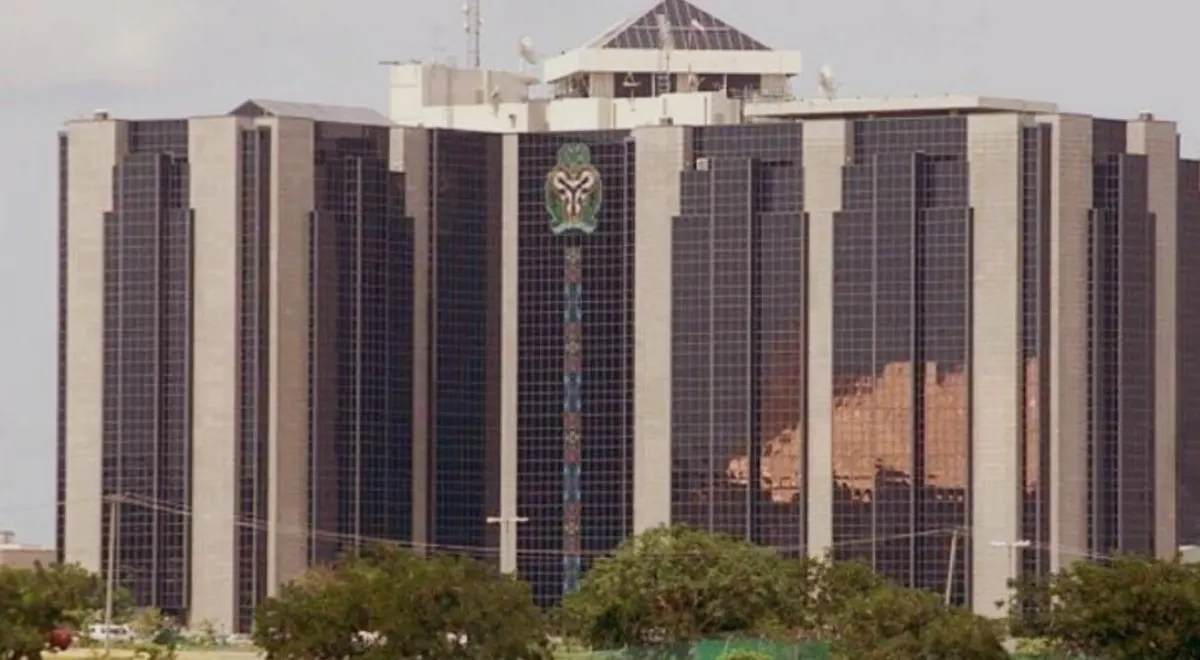
The Central Bank of Nigeria issued a circular on June 24 2026. It ordered banks and payment service providers to freeze accounts tied to six individuals and four Bureau De Change operators. The directive took effect immediately. It targets entities designated under Nigeria’s sanctions list for alleged terrorism financing.
The CBN identified the sanctioned BDCs as Generation Currency Bureau De Change Limited, Manhattan Bureau De Change Limited, Nine to Nine Exchange Bureau De Change Limited, and Abbal Bako & Sons Bureau De Change Limited. The six individuals named are Muktar Muhammad Adamu, Babangida Muhammed Adamu Hammajam, Abdullahi Umar Usman, Ibrahim Abubakar, Adamu Chiroma, and Yakubu Ogirima Ibrahim. The circular referenced Executive Order 13224, a U.S. Treasury tool that enables cross-border sanctions against terrorist networks.
Financial institutions must screen all customers and transactions against the updated sanctions list. They must freeze assets without prior notice. They must also file Suspicious Transaction Reports with the Nigerian Financial Intelligence Unit. The CBN set a 48-hour deadline for compliance reports. Institutions with no matches must submit nil returns. Retrospective reviews of past transactions are mandatory. False or misleading reports will trigger regulatory sanctions under the Banks and Other Financial Institutions Act 2020.
The directive follows U.S. Treasury sanctions on Mukhtar Muhammad, a Lagos-based BDC operator. The U.S. accused him of facilitating financial transactions for the Islamic State West Africa Province. OFAC designated three of his companies—Nine to Nine Exchange, Generation Currency, and Manhattan Bureau De Change—as conduits for ISWAP funds. The CBN’s action extends to any entity owned 50% or more by the sanctioned individuals, closing indirect ownership loopholes.
The Association of Bureau De Change Operators of Nigeria responded through its president, Aminu Gwadebe. He stated that most licensed BDCs comply with Nigerian laws. The CBN’s directive, however, signals zero tolerance for non-compliance. Institutions must now invest in transaction monitoring systems capable of detecting terrorism financing patterns. The CBN will verify compliance through off-site reviews and on-site examinations.
The sanctions expose structural vulnerabilities in Nigeria’s financial oversight. The BDC sector operates with minimal transparency. Regulatory enforcement has historically been weak. The CBN’s latest move aligns with global counter-terrorism financing standards. It also reflects Nigeria’s obligations under the Financial Action Task Force recommendations. The directive requires institutions to adopt risk-based approaches to customer due diligence and ongoing monitoring.
The CBN’s action carries broader economic implications. The BDC sector plays a critical role in Nigeria’s foreign exchange market. The freezing of assets could disrupt legitimate business operations linked to the sanctioned entities. The CBN’s insistence on immediate compliance raises due process concerns. Stakeholders argue that asset freezes without prior notice may affect innocent third parties. The CBN has not addressed these concerns publicly.
The directive sets a precedent for other high-risk sectors. Real estate and trade finance have long been conduits for illicit funds. The CBN’s enforcement approach may extend to these sectors in future. Financial institutions must now prioritize compliance over short-term profitability. The CBN’s action underscores the need for systemic reforms to align Nigeria’s financial system with global anti-money laundering standards.