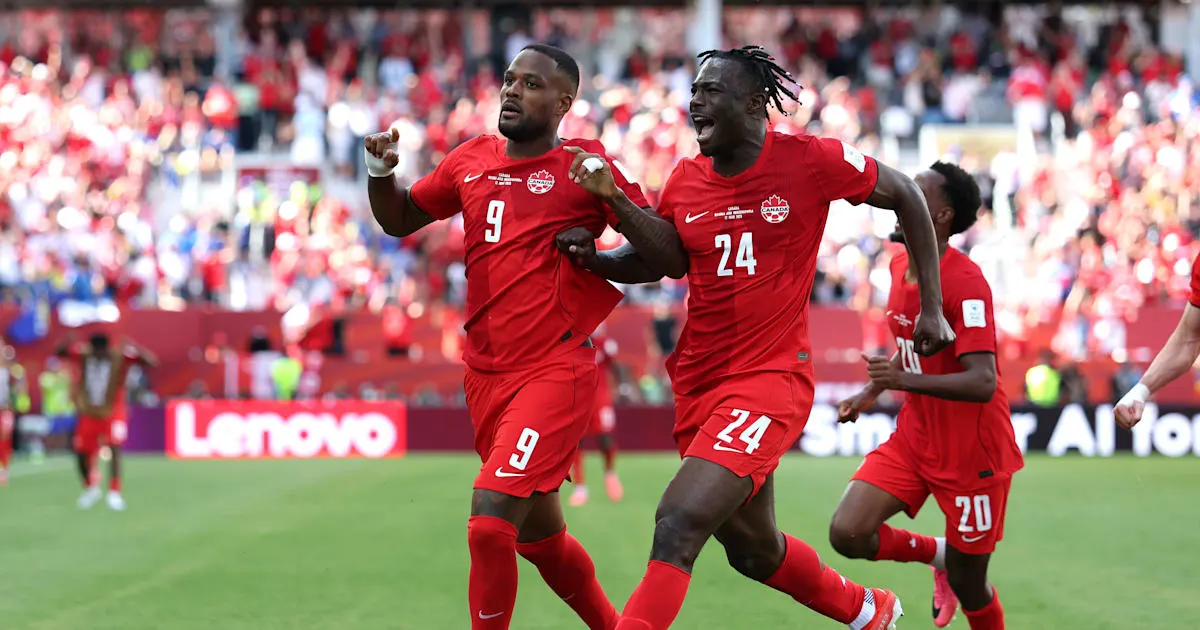
Vancouver’s BC Place erupted in celebration Thursday night as Canada dismantled Qatar 6-0 in their Group B World Cup clash, a result that all but secures their passage to the knockout stages. Yet the euphoria of Jonathan David’s hat-trick and a record-breaking performance for CONCACAF was swiftly tempered by the harrowing sight of Ismaël Koné being stretchered off with a broken leg, an injury that threatens to derail Canada’s midfield engine and expose a squad already stretched by defensive absences.
The 24-year-old Montreal native, a linchpin in Canada’s high-pressing system, collapsed in the 52nd minute after a challenge from Qatar’s Assim Madibo. Replays confirmed the fracture occurred when Madibo’s trailing leg clipped Koné’s planted ankle, a freak collision that left the midfielder motionless on the turf. Medical staff administered pain relief before carting him off, his raised hand a grim farewell to the 52,497-strong crowd. The incident triggered a VAR review, upgrading Madibo’s yellow to a red—Qatar’s second of the match—but the damage was done. Koné’s absence leaves manager Mauro Biello with a selection dilemma that could reshape Canada’s tactical identity for the remainder of the tournament.
Biello’s starting XI had already been forced into a makeshift configuration. Derek Cornelius, typically a centre-back, was deployed as a defensive midfielder to cover for the suspended Stephen Eustáquio, while Moise Bombito—returning from his own leg fracture in October—replaced Cornelius at half-time. The adjustments underscored Canada’s defensive frailty, a vulnerability masked by Qatar’s numerical disadvantage after Homam Ahmed’s 33rd-minute red card. With Koné sidelined, Biello must now choose between overloading the midfield with attackers or sacrificing creativity for control. The latter option risks stifling David and Cyle Larin, whose clinical finishing—Larin’s rebound goal in the 16th minute and David’s brace before half-time—propelled Canada to their first-ever World Cup victory.
The injury’s ripple effects extend beyond tactics. Koné’s contract expires in 2027, and his market value—already inflated by consistent performances in Europe—could surge further if Canada advances. Clubs like Bayer Leverkusen and AC Milan, both linked with summer moves, will now scrutinise his recovery timeline. The Canadian Soccer Association faces a delicate balancing act: accelerating Koné’s return to capitalise on his form or prioritising his long-term health amid a congested domestic league schedule. The stakes are heightened by the presence of FIFA president Gianni Infantino and CONCACAF chief Victor Montagliani in the VIP box, their attendance a reminder of the political pressure to showcase Canada’s footballing progress on home soil.
Behind the scenes, the injury has exposed a dressing room fracture. Nathan Saliba’s tribute to Koné—a free-kick celebration holding up his teammate’s jersey—was met with muted applause, a rare moment of discord in a night of triumph. Sources close to the squad reveal Koné had privately expressed frustration over the lack of squad depth in midfield, a concern amplified by Eustáquio’s suspension. The incident has reignited debates about Canada’s reliance on a core of young stars, with veterans like Atiba Hutchinson and Junior Hoilett—both unused substitutes—questioning the bench’s readiness to step up. The tension is unlikely to surface publicly, but the injury has forced Biello to confront a squad imbalance that could define Canada’s World Cup trajectory.
Tactically, Qatar’s collapse offered a masterclass in exploiting defensive disorganisation. Canada’s first three goals originated from quick transitions, with Koné’s distribution—before his injury—unlocking Qatar’s high line. His absence leaves a void in progressive passing; Canada averaged 62% possession pre-injury but struggled to penetrate Qatar’s block post-half-time, relying instead on set-pieces and individual brilliance. Biello’s post-match comments hinted at a shift toward a 4-4-2 formation against Switzerland, with Alphonso Davies pushed higher up the pitch to compensate for Koné’s creativity. The gamble could backfire if Switzerland’s midfield trio of Granit Xhaka, Denis Zakaria, and Xherdan Shaqiri dominate possession, forcing Canada into a defensive shell.
The financial implications of Koné’s injury are equally stark. Canada’s World Cup budget—already strained by infrastructure upgrades—allocated $12 million for player bonuses tied to knockout-stage progression. Koné’s absence jeopardises those payouts, with insurers likely to demand a full medical review before approving any claims. The CSA’s commercial partners, including Air Canada and Tim Hortons, had planned campaigns around Koné’s narrative as a homegrown talent; those assets are now in limbo. Meanwhile, Qatar’s FA faces its own reckoning. Madibo’s red card and the team’s melee at full-time—sparked by a clash between Akram Afif and Richie Laryea—have drawn scrutiny from FIFA’s disciplinary committee. The fallout could include fines or suspensions, further destabilising a side already eliminated from knockout contention.
Canada’s victory, while historic, has laid bare the fragility of their World Cup campaign. The 6-0 scoreline flattered a performance that relied on individual moments rather than collective cohesion. Koné’s injury has stripped Biello of his tactical flexibility, forcing a reactive approach to squad management. The Switzerland clash on Tuesday will test whether Canada can adapt or if the cracks exposed by Qatar’s collapse will widen under the weight of title race pressure. For a nation still celebrating its first World Cup win, the reality of elite football’s unpredictability has arrived in brutal fashion.