Seattle’s evening air carried the weight of 92 years of World Cup frustration for Egypt, but it was Belgium who left the pitch with the heavier burden. A 1-1 draw against the Pharaohs in Group G’s opener exposed fractures in Rudi Garcia’s tactical blueprint that run deeper than a single point dropped. The match will be remembered for Emam Ashour’s 19th-minute thunderbolt—a strike that announced Egypt’s arrival on the global stage—but the real story unfolded in the spaces Belgium’s midfield failed to control, and the structural vulnerabilities that may define their campaign before it truly begins.
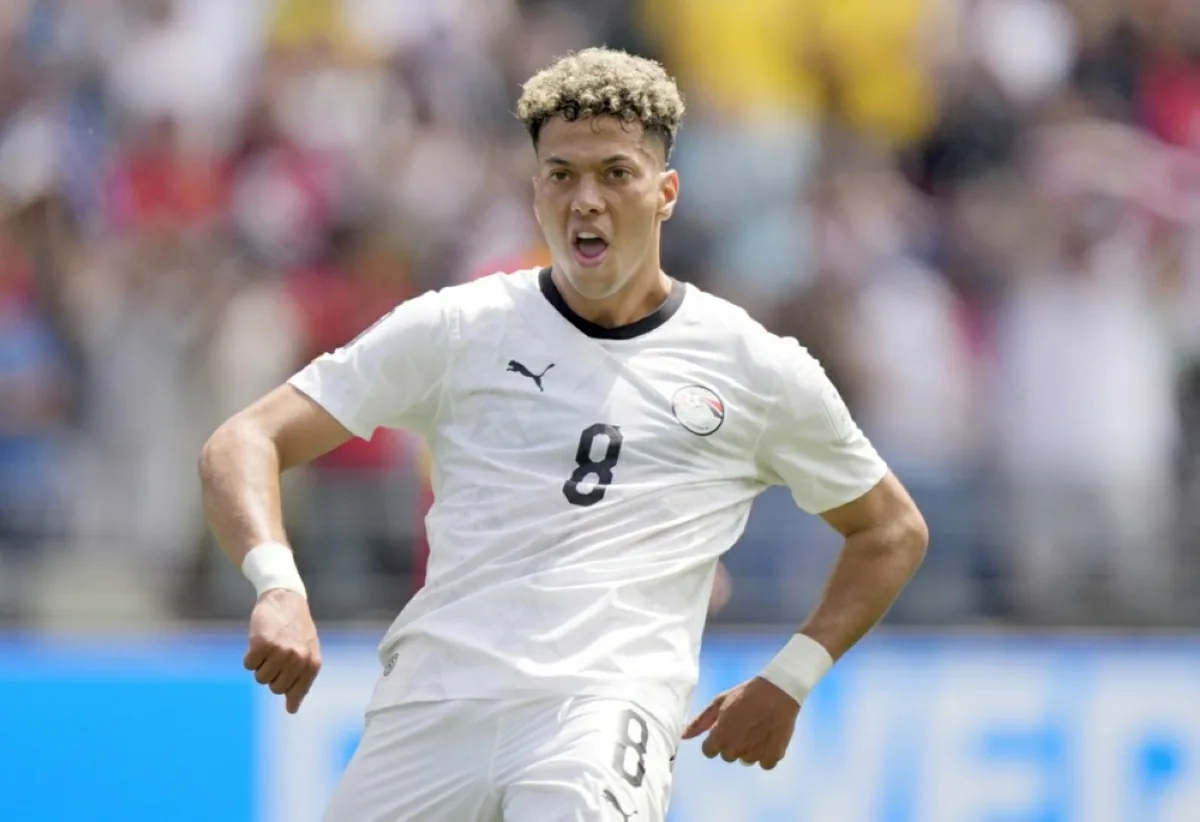
Ashour’s goal was no fluke. The 24-year-old Al-Ahly midfielder, playing in his first major tournament, exploited a moment of Belgian disorganisation that laid bare their transitional frailties. As Kevin De Bruyne received the ball 30 yards from goal, Egypt’s press triggered a panicked clearance from Jan Vertonghen. The ball fell to Ashour, who had surged forward unmarked, and his first-time shot arrowed past Thibaut Courtois. The goal was Egypt’s first lead in a World Cup match since 1934, but the build-up revealed a deeper tactical misalignment: Belgium’s double pivot of Youri Tielemans and Orel Mangala was overrun in the moments preceding the strike, leaving Vertonghen isolated against Egypt’s front three.
Garcia’s post-match admission that Belgium “should have been better as a team in the first half” was a diplomatic understatement. The Red Devils’ midfield collapse was not just a matter of individual errors but a systemic failure to adapt to Egypt’s 4-1-4-1 shape. Hector Cuper’s side sat deep, forcing Belgium to play through a compact block, yet Tielemans and Mangala struggled to find vertical passes. Their combined 47% pass completion in the final third—compared to Egypt’s 63%—highlighted a disconnect between Belgium’s possession dominance (68%) and their inability to penetrate. The introduction of Romelu Lukaku in the 66th minute, while immediately effective in forcing Mohamed Hany’s own goal, masked the underlying issue: Belgium’s midfield lacked a creative fulcrum to unlock Egypt’s defence before the striker’s arrival.
The most glaring tactical oversight was Belgium’s failure to exploit Egypt’s high defensive line in the first half. With Cuper instructing his back four to push up, Belgium had repeated opportunities to play balls in behind for Dodi Lukebakio or Jeremy Doku. Yet De Bruyne, often the architect of such moves, was forced to drop deeper to collect the ball, diluting his impact. The Manchester City playmaker completed just two of his eight attempted through balls—a statistic that underscores Belgium’s creative stagnation. Garcia’s decision to replace Doku with Matias Fernandez-Pardo in the 86th minute, citing a “breathing issue,” only compounded the problem; the winger had been Belgium’s most consistent outlet for direct running, averaging 3.2 successful dribbles per 90 minutes in qualifying.
Beyond the tactical post-mortem, the draw revealed a squad in transition at precisely the wrong moment. Belgium’s “Golden Generation” is now a fading brand, with key figures either past their prime or, like Lukaku, returning from injury-shortened seasons. The striker’s impact off the bench—23 seconds between his introduction and the equaliser—was a reminder of his unmatched physical presence, but his lack of match fitness raises questions about Garcia’s reluctance to start him. Lukaku’s 12 appearances for Napoli last season, yielding just two goals, suggest a player still rebuilding rhythm, yet Belgium’s over-reliance on his cameo appearances speaks to a lack of depth in their attacking options. With Eden Hazard retired and Yannick Carrasco’s form wavering, Belgium’s forward line lacks a consistent goal threat outside of Lukaku’s imposing frame.
Egypt, meanwhile, emerged with more than a point; they left Seattle with a tactical template for their next two matches. Cuper’s use of Ashour as a hybrid box-to-box midfielder, tasked with both breaking up play and arriving late in the box, gave Egypt a dynamic edge. The Al-Ahly man won 7 of his 9 defensive duels and completed 88% of his passes, a performance that will force Iran and New Zealand to adjust their game plans. More critically, Egypt’s defensive resilience in the final 20 minutes—holding Belgium to just one shot on target after the equaliser—demonstrated a mental fortitude absent in their previous World Cup campaigns. The Pharaohs’ ability to switch between a low block and a counter-pressing system, depending on the phase of play, suggests a tactical maturity that could see them progress beyond the group stage for the first time.
The draw also exposed a growing rift between Belgium’s on-pitch identity and their off-field ambitions. Garcia’s insistence that Belgium “have to win against Iran” carries an undercurrent of desperation, given the squad’s lack of cohesion. The manager’s public praise for Lukaku’s impact—“when you see Lukaku coming onto the pitch, you’re probably quaking in your boots”—betrays a reliance on individual brilliance over collective structure. This approach worked during Belgium’s 2018 World Cup run, where they finished third, but the current squad lacks the same balance. The absence of a natural defensive midfielder, with Mangala often caught between screening the defence and supporting attacks, leaves Belgium vulnerable to quick transitions—a weakness Egypt exploited repeatedly before half-time.
For all the focus on Belgium’s struggles, the match’s most significant consequence may be the psychological shift for Egypt. The Pharaohs entered the tournament with the weight of eight winless World Cup matches, but their performance in Seattle was a statement of intent. Cuper’s decision to start Mostafa Zico, a 22-year-old winger with just three international caps, ahead of the more experienced Trézéguet, paid dividends in the first half. Zico’s direct running stretched Belgium’s defence, and his low cross in the 42nd minute nearly set up Salah for a second goal. The Liverpool forward, often Egypt’s talisman, was largely contained by Belgium’s backline, but his ability to draw fouls and create space for others—such as his headed effort saved by Courtois—kept Egypt’s attacking threat alive. If Salah can find his rhythm against Iran, Egypt’s chances of advancing improve dramatically.
The Group G dynamics now hinge on Belgium’s ability to correct their midfield imbalance before Sunday’s clash with Iran. Garcia’s options are limited: deploying a three-man midfield risks leaving Lukaku isolated up front, while persisting with Tielemans and Mangala invites further exposure to quick counters. Iran, who face New Zealand next, will have noted Belgium’s struggles against Egypt’s press and are likely to adopt a similar approach. For Egypt, the draw offers a foundation to build on, but their defensive frailties—particularly at set-pieces, where Belgium nearly capitalised twice—must be addressed. The Pharaohs’ historic World Cup drought is far from over, but after 92 years of near-misses, they finally have a blueprint to rewrite their narrative.