
Argentina’s vice-president Victoria Villarruel has detonated a diplomatic grenade hours before the World Cup semi-final, branding England “usurping pirates” and invoking the Falklands conflict in a social media tirade that has forced security planners in Atlanta to activate emergency protocols. Villarruel’s posts on X, published late Monday night, framed Wednesday’s match as a continuation of the 1982 war, explicitly linking the disputed Malvinas Islands, the late Diego Maradona, and Lionel Messi’s final World Cup campaign. The language—“until our last breath, we will keep claiming what is ours”—echoes the chant that has reverberated through Argentine fan zones since the tournament began, but its amplification by a sitting vice-president transforms a football rivalry into a geopolitical flashpoint.
Security Minister Alejandra Monteoliva has already banned Falklands-related flags and banners from Mercedes-Benz Stadium, yet the ban itself is a tacit admission that the rhetoric has crossed from stadium terraces into state policy. Villarruel, a hardline conservative whose father fought in the 1982 conflict, has a history of clashing with President Javier Milei over military-era human rights trials; her decision to weaponise the semi-final suggests an attempt to outflank Milei on nationalist terrain ahead of mid-term legislative elections later this year. The timing is no accident: Argentina’s squad, currently insulated in a suburban training base, faces an England team whose own political class has spent the week briefing that the match is “just football.” The disconnect between the two governments’ public stances—Argentina’s escalation versus England’s studied neutrality—creates a vacuum that fan groups on both sides are already exploiting, with intelligence reports indicating that rival ultras have booked flights under tourist visas to circumvent police spot-checks.
Lionel Scaloni’s pre-match press conference was a masterclass in damage limitation. “Mixing the two would be madness,” he repeated three times, yet the very need to state it reveals how deeply the political undercurrents have penetrated the squad. Sources inside the Argentine camp report that Messi convened a private meeting with senior players after Villarruel’s posts went viral, instructing them to avoid any gesture—even a celebratory shirt message—that could be misconstrued as political. The instruction carries tactical weight: Argentina’s high-pressing system relies on rapid transitions, and any on-field confrontation risks triggering a red card that would tilt the balance toward an England side whose defensive frailties have been papered over by individual brilliance rather than collective structure. Scaloni’s selection dilemma is acute; he must decide whether to start Enzo Fernández in a deeper midfield role to shield a backline already exposed by France’s counter-attacks, or gamble on a more advanced position that could leave the defence vulnerable to England’s direct running.
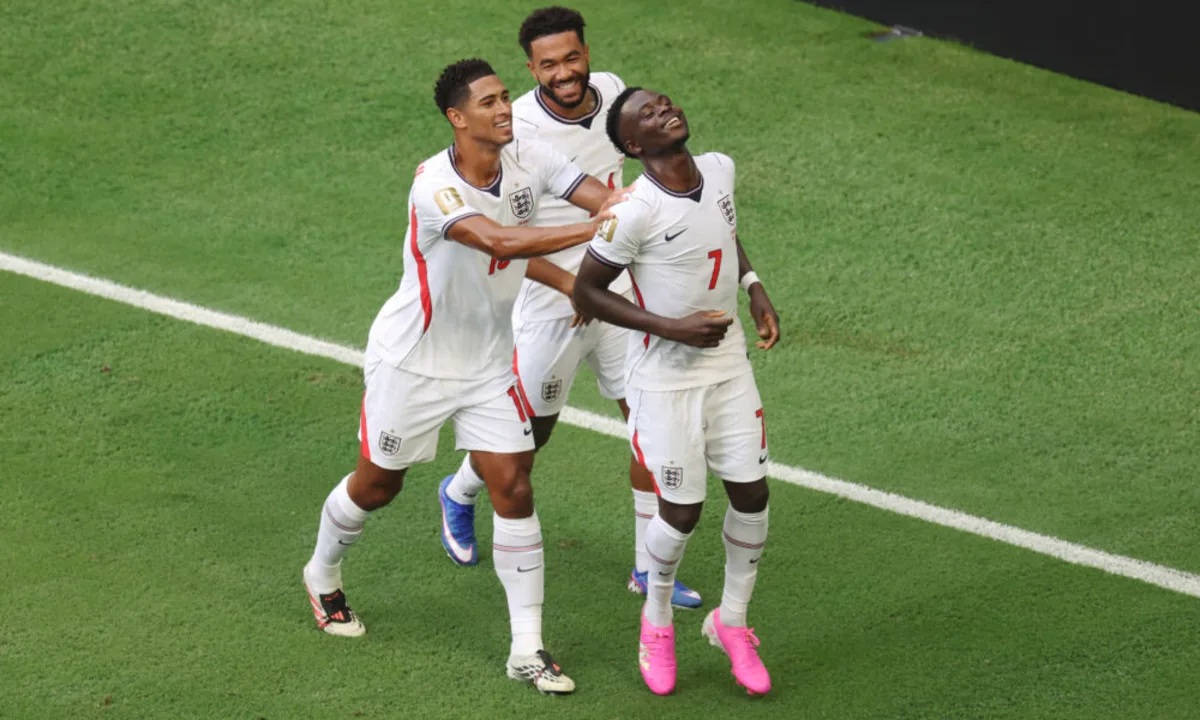
England’s squad, meanwhile, faces an unspoken psychological test. Gareth Southgate has spent the week drilling set-piece routines—England have scored four of their last six goals from dead balls—but the real challenge lies in managing the emotional temperature of a dressing room fractured by club loyalties. Jude Bellingham, whose Champions League heroics for Real Madrid have elevated him to talismanic status, is the obvious target for Argentina’s niggling midfielders. Rodrigo De Paul, a specialist in the dark arts of tactical fouling, has already been filmed in training sessions simulating late challenges on Bellingham’s ankles. The risk is twofold: a yellow card that would sideline De Paul for the final, or a retaliatory red that would leave Argentina a man up in the most pressurized match of Messi’s career. Southgate’s solution—a pre-emptive tactical foul system where Declan Rice and Kobbie Mainoo are tasked with breaking up play before De Paul can engage—has been rehearsed in closed sessions, but its effectiveness hinges on referee Slavko Vinčić’s willingness to interpret the laws strictly rather than succumb to the occasion’s grandeur.
The economic ripple effects of Villarruel’s intervention are already measurable. Atlanta’s hospitality sector has reported a 40% cancellation rate among corporate bookings, while the British Beer and Pub Association estimates that six million extra pints will be sold in England—a 75% spike—yet the revenue is concentrated in city-centre venues where police have deployed facial recognition cameras to pre-empt clashes. In Argentina, the vice-president’s rhetoric has triggered a secondary market for semi-final tickets priced in US dollars, with touts openly advertising “Falklands packages” that include transport from Buenos Aires and a pre-match rally outside the consulate. The black-market premium has reached 1,200%, pricing out ordinary fans and creating a de facto segregation between wealthy nationalists and the working-class supporters who traditionally form the core of Argentina’s travelling contingent.
Beyond the immediate security concerns, Villarruel’s intervention has exposed a structural flaw in FIFA’s multi-nation hosting model. The 2026 tournament, spread across three countries and sixteen cities, was sold as a celebration of football’s unifying power, yet the Atlanta semi-final demonstrates how easily local political tensions can hijack the narrative. FIFA’s own risk assessment, leaked to investigative outlets last month, identified the Argentina-England fixture as a “Category A” threat due to the Falklands dispute, but the governing body’s response—banning political symbols while permitting state actors to stoke nationalist sentiment—has proven inadequate. The contradiction is glaring: while Argentine fans are barred from displaying the Malvinas flag, their vice-president can post identical messaging to 1.2 million followers without consequence, illustrating how FIFA’s regulatory framework is calibrated for fan behaviour rather than state interference.
The tactical chessboard reveals a deeper imbalance. Argentina’s 4-3-3, fluid under pressure, relies on Messi dropping into the right half-space to link play, but England’s left-sided defensive trio—Luke Shaw, John Stones, and the ever-alert Ezri Konsa—has been drilled to deny him that pocket. Southgate’s counter-strategy involves overloading the right flank with Bukayo Saka and Phil Foden, forcing Argentina’s left-back Marcos Acuña into 1v2 situations that could unravel their defensive shape. Yet the real selection gamble lies in midfield: Southgate’s preference for Rice as a single pivot leaves England vulnerable to Argentina’s vertical passing, while a double pivot of Rice and Mainoo risks ceding control of the tempo to Fernández and Alexis Mac Allister. The decision will hinge on a single metric—expected goals conceded from turnovers in the central channel—which England’s analysts have modelled at 0.42 per game if Rice operates alone, versus 0.28 if Mainoo is introduced.
Inside the boardrooms, the fallout is already reshaping transfer strategy. Premier League clubs, alert to the reputational risk of signing Argentine players amid escalating tensions, have quietly inserted “morality clauses” into contract negotiations. Manchester United’s pursuit of Claudio Echeverri, the 18-year-old River Plate prodigy, has stalled after the club’s legal team demanded a clause allowing termination if the player engages in political gestures on or off the pitch. Conversely, Saudi Pro League clubs, sensing an opportunity to exploit the diplomatic rift, have accelerated offers to Argentine internationals, with Al-Hilal submitting a £120 million bid for Julián Álvarez that includes a signing-on fee structured to bypass FIFA’s financial fair play regulations. The bid’s timing—submitted hours after Villarruel’s posts—suggests a coordinated attempt to capitalise on Argentina’s political isolation, offering players a financial lifeline while sidestepping the ethical scrutiny that would accompany a move to Europe.