
Friday’s Round of 32 fixtures at the 2026 World Cup represent Africa’s last roll of the dice. Egypt, Cape Verde and Ghana must each navigate a single-elimination gauntlet against higher-ranked opponents if the continent is to avoid the embarrassment of Morocco carrying its flag alone into the last 16. The stakes are existential: Africa arrived with a record ten teams and nine survived the group stage, yet five have already fallen in the knockout rounds. A collective failure on Friday would reduce the continent’s presence to a solitary nation for the first time since 1998, when Nigeria stood alone.
Egypt face Australia in Dallas at 19:00 local time, a contest that pits a side built on defensive resilience against a team whose pressing intensity has already unsettled stronger opponents. The Pharaohs’ backline, marshalled by veteran centre-half Ahmed Hegazi, has conceded only once in three matches, but their attacking output has been anaemic. Mohamed Salah’s hamstring strain has forced coach Hossam Hassan into a selection dilemma: risk the talisman on a pain-killing injection and invite a career-threatening rupture, or field a toothless front line that must rely on set-pieces. Australia’s left wing-back Nathaniel Atkinson has already exposed full-back weaknesses in the group stage, and his direct running could force Egypt into a midfield collapse if the central pairing of Elneny and Fathi fails to track runners.
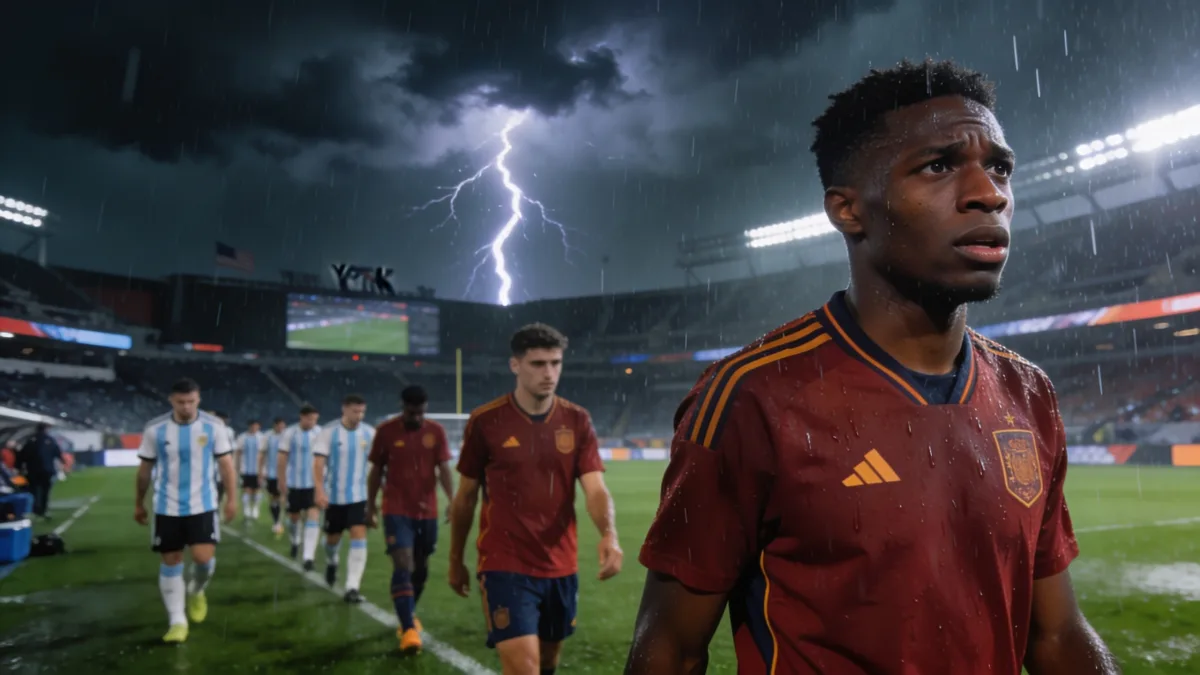
The tactical masterclass required to overcome Argentina in Miami falls to Cape Verde, a nation of 600,000 people that has already defied every demographic model. Their 4-1-4-1 system is designed to compress the space between defence and midfield, but Argentina’s positional rotations—especially the half-space movements of Enzo Fernández—threaten to pull the islanders out of shape. Cape Verde’s counter-attacking threat hinges on the pace of Ryan Mendes, yet he will be isolated against Cristian Romero and Lisandro Martínez, a defensive pairing that has conceded only twice in the last twelve months. The real battle will unfold in the transition moments: if Cape Verde can force Argentina into hurried clearances, they may exploit the high line of Nicolás Otamendi, whose recovery pace has declined since his 36th birthday.
Ghana’s clash with Colombia in Kansas City exposes a squad imbalance that coach Carlos Queiroz has papered over with motivational rhetoric. The Black Stars’ midfield trio of Thomas Partey, Mohammed Kudus and Salis Abdul Samed is theoretically world-class, yet their collective pressing triggers are misaligned. Colombia’s James Rodríguez thrives in the pockets of space that appear when Ghana’s midfield steps too early or too late, and his through balls to Luis Díaz have already carved open three group-stage defences. Ghana’s full-backs, Gideon Mensah and Denis Odoi, are both natural centre-halves playing out of position; Colombia’s wingers will target their recovery angles relentlessly. Queiroz’s insistence on a 4-3-3 leaves Ghana vulnerable to numerical overloads in wide areas, a frailty that Colombia’s Juan Cuadrado will exploit mercilessly.
Beyond the tactical blueprints, each African side carries institutional baggage that could fracture under knockout pressure. Egypt’s dressing room is split between the veteran core that reached the 2018 final and a younger faction that resents their defensive conservatism. Salah’s injury has become a lightning rod for these tensions; if he is omitted, the squad’s belief in Hassan’s leadership may evaporate within minutes. Cape Verde’s squad is entirely composed of players from lower-league European clubs, and their lack of experience in high-stakes environments could manifest as positional indiscipline in the final third. Ghana’s boardroom interference has been relentless: Queiroz was appointed only after the federation overruled the technical committee’s preferred candidate, and his contract standoff with the Ghana FA remains unresolved, creating a distraction that no amount of motivational speeches can erase.
The financial consequences of failure are equally stark. Africa’s expanded World Cup allocation was supposed to unlock new sponsorship deals and broadcast revenue, but a premature exit for three of the continent’s biggest football economies would trigger clawback clauses in commercial contracts. Egypt’s deal with title sponsor WE, worth $12 million annually, includes performance bonuses that only activate if the team reaches the last 16. Cape Verde’s surprise run has already attracted interest from Puma, but the German brand’s offer is contingent on the team progressing further. Ghana’s government, which underwrote the team’s preparation costs, faces public backlash if the Black Stars bow out early; the sports ministry’s budget for the next Olympic cycle could be slashed by as much as 40% in the event of a Round of 32 defeat.
Morocco’s penalty shootout victory over the Netherlands offered Africa a temporary reprieve, but the Atlas Lions’ success has also raised the bar for their continental peers. Walid Regragui’s squad is built on a foundation of domestic-based players who understand the psychological demands of knockout football, a luxury none of the three remaining African teams possess. Egypt’s squad is 85% foreign-based, Cape Verde’s 100%, and Ghana’s 90%; the disconnect between club and country rhythms has never been more pronounced. The three coaches—Hassan, Bubista and Queiroz—have a combined 17 knockout matches at major tournaments, yet only Queiroz has won one. Their collective inexperience in sudden-death scenarios could prove decisive if the matches drift into extra time, where physical conditioning and mental resilience separate winners from victims.
The hidden variable in Friday’s fixtures is the refereeing standard. Africa’s teams have been disproportionately affected by VAR interventions in the group stage, with three of the continent’s five red cards coming from marginal decisions. Egypt’s last-16 tie against Australia will be officiated by Italian referee Daniele Orsato, whose tendency to brandish cards early in matches could disrupt the Pharaohs’ disciplined defensive structure. Cape Verde’s match features Argentine referee Fernando Rapallini, a stickler for tactical fouls; his interpretation of midfield challenges could stifle the islanders’ counter-attacking rhythm. Ghana’s referee, Slavko Vinčić, has a history of leniency in wide areas, which may benefit Colombia’s wingers but could also allow Ghana’s full-backs to escape punishment for cynical fouls.
If all three African teams fall, the narrative will shift instantly to institutional failure. FIFA’s decision to expand the World Cup to 48 teams was sold as a victory for global football, yet the knockout-round format—single-elimination from the Round of 32—has exposed the gap between quantity and quality. Africa’s nine representatives in the last 32 were the result of a flawed qualifying process that rewarded weak confederations with additional slots; the continent’s teams have now been punished for that generosity. The real test begins on Saturday, when the winners of Friday’s matches will face opponents who have already navigated one knockout hurdle. For Egypt, Cape Verde and Ghana, the dream ends at the first obstacle—or it becomes the foundation for something greater.